Task 4. Land Rights Folio
Question. Was the Land Rights Movement Unsuccessful?
Task Overview: Create an historical folio that examines the statement:
“The land rights movement in Australia was unsuccessful.”
Your task is to investigate different perspectives, analyse key strategies, and evaluate evidence from sources to develop a reasoned historical argument.
Your folio will lead to a final 800 word folio in which you present your judgement.
How to do the task:
Part 1. Context overview (150 – 200 words)
What were the aims of the land rights movement in Australia.
Key events (e.g. Wave Hill Walk-Off, Mabo, Wik, Native Title Act)
Why did land rights became a major issue?
Part 2. Perspectives (Minimum 3) (200 words)
Analyse different viewpoints/perspectives on the success or failure of the movement.
Suggested perspectives:
Indigenous activists and communities - compulsory
Australian government (past and present)
Pastoralists / mining interests
Legal system / courts
Historians
Public opinion / media
For each perspective:
What did they want?
How did they define “success”?
What evidence supports their view?
Part 3. Source analysis (Minimum 3 sources) (200 words)
Use the sources to support your analysis.
You must include:
At least one primary source
At least one Indigenous perspective
For each source, include the following information:
Origin (who created it, when, where)
Perspective (viewpoint, bias, purpose)
Key evidence (quotes or details)
Perspective / bias
Usefulness and limitations
Explanation of relevance to the inquiry question. (How does this source help answer your question)
Part 4. Evaluation in class. (200 words)
Questions to consider.
Weigh up successes vs limitations
Consider short-term vs long-term outcomes
Decide who benefited and who did not
Did legal victories translate into real change?
Were outcomes symbolic or practical?
Has inequality persisted despite reforms?

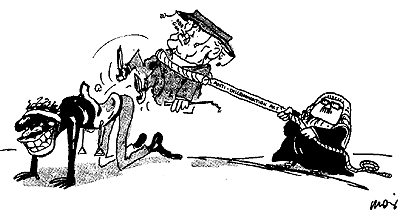
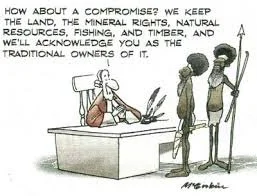
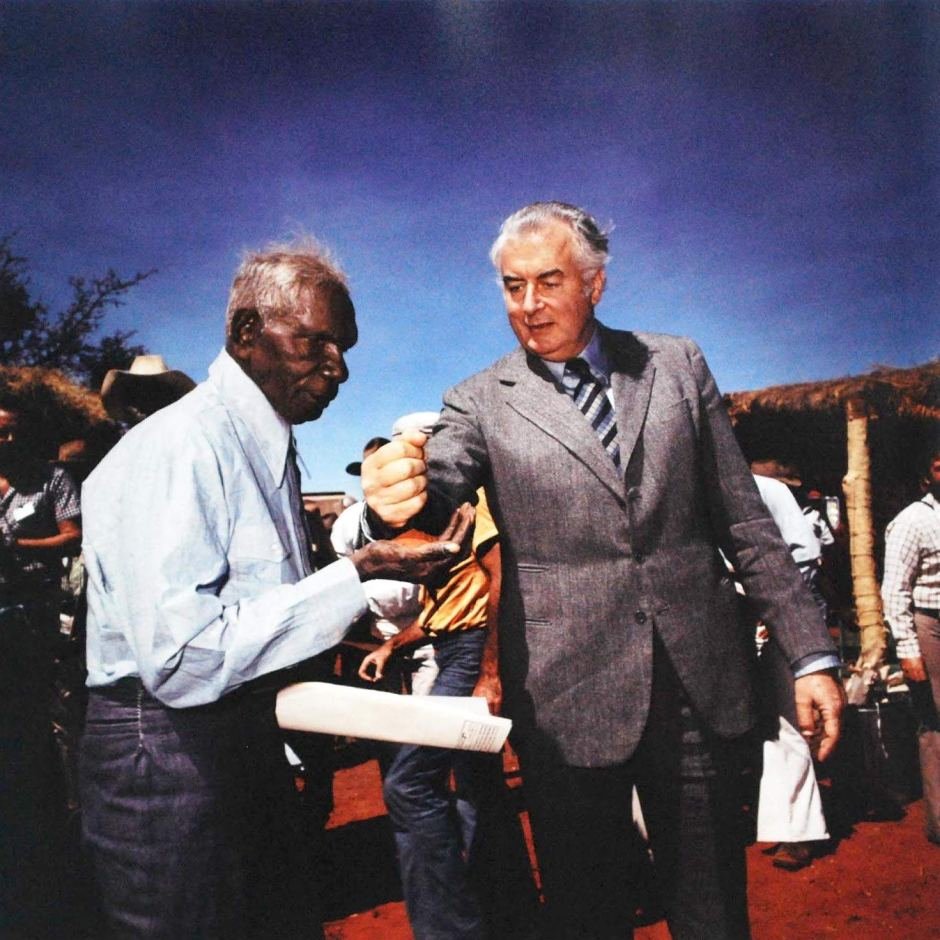
Sources Analysis Guide
Don’t forget: Quote often and begin your response with name of the author, not the Source number. Put the source number in brackets at the end of the quote/paraphrasing.
For example:
This is supported by Jones who states that 'History students would be more popular at parties if they used this method.' (Source 3)
More successful responses:
contain relevant evidence (quotes and observations) from sources when required.
Less successful responses
provide responses without reference to any evidence from the source
state that sources are limited without explaining why using evidence
do not assess the nature of sources clearly
do not explain how the nature and origin of the sources are a strength or limitation
do not include the source in the response.
Referencing Guidelines
When do you need an endnote/ footnote?
Quotes
Paraphrasing
Facts and figures
Images
How to footnote
The first time you footnote a book, article or document you need to list it in full as follows:
Jones, E., A collection of inappropriate remarks made in the History classroom, Penguin, 2024, p.34
If you quote from Inappropriate Remarks as your next quote you don’t write out the whole author/title again you simply use the abbreviation ibid., p#
If you quote from the same source, same page it is simply ibid.
If your next quote is from a different source, you need to write out full reference: author surname, initials, title in italics, publisher, year of publication, page number.
If your next quote is again from Inappropriate Remarks, you simply put the author’s name and initials and the abbreviation op.cit., p#
Footnote samples
Jones, E., A collection of inappropriate remarks made in the History classroom, Penguin, 2024, p.34
ibid.
ibid., p.38
McKenzie, C.M., Please don't make me go back in there. A classroom memoir, Featherhead, 2019, p.11
Jones, E., op.cit., p.59
Example reference list
Bibliography:
Aub.edu.lb.libguides.com. (2020). LibGuides: Lebanese Civil War: 1975-1991: Home. [online] Available at: https://aub.edu.lb.libguides.com/LebaneseCivilWar.
Badran, T., 2008. The Lebanese Civil War. MERIA: Middle East Review of International Affairs, 12(2), pp.MERIA: Middle East Review of International Affairs, June 2008, Vol.12(2).
Crawford, M. & Army Command General Staff Coll Fort Leavenworth KS School Of Advanced Military Studies, 2010. Civil War and Intervention: Lessons Remembered From the Lebanese Civil War and the U.S. Response.