
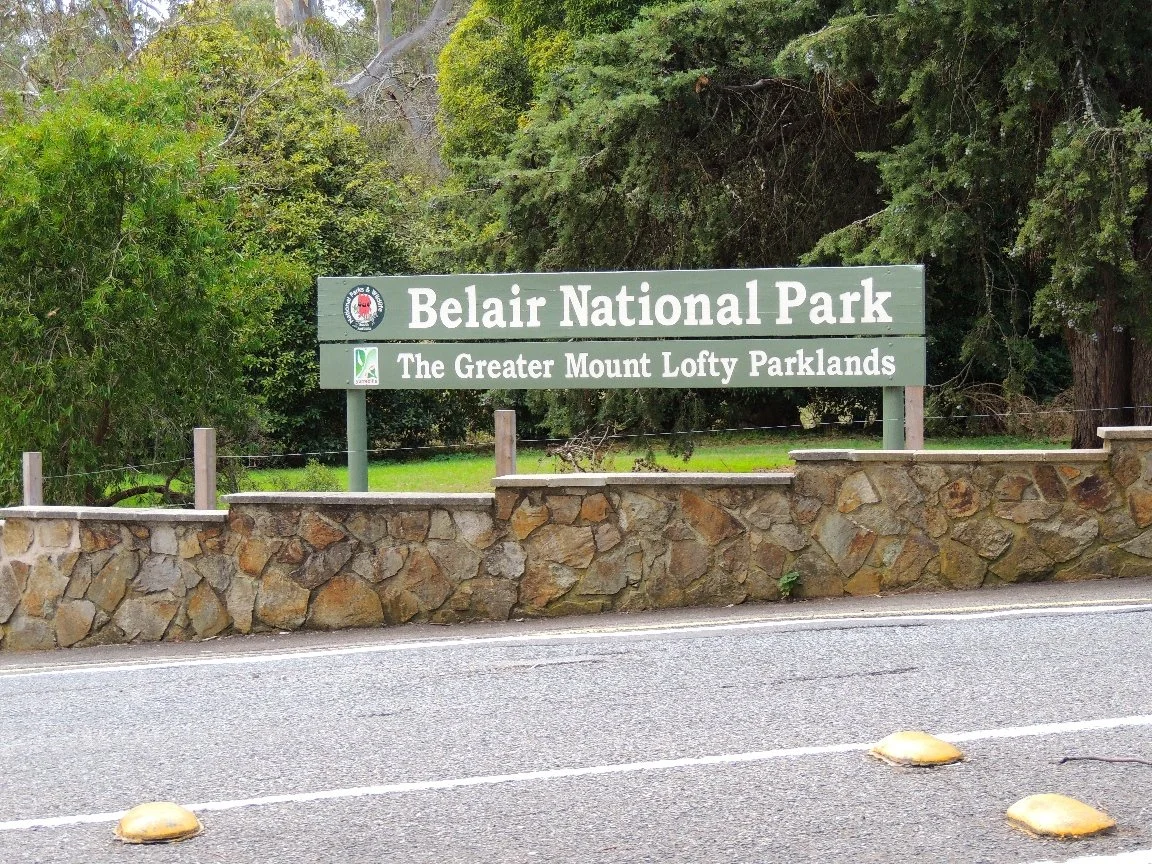
The Belair National Park (BNP), is located in the Adelaide Hills approximately 13 kilometres southeast of Adelaide’s CBD. It protects habitat that has been lost in much of the Mount Lofty Ranges.
The park provides habitat for wildlife, including koalas, kangaroos, the southern brown bandicoot and numerous bird species. By conserving these environments, the park helps protect biodiversity within a landscape increasingly affected by urban development and habitat fragmentation.
The park also supports community wellbeing, offering opportunities for walking, cycling, picnicking and enjoying nature. For visitors, spending time in the park can encourage physical activity, reduce stress and strengthen connections with the natural environment and with other people.
BNP Source Analysis
We are going to complete a source analysis to learn about the management of the park.
Source 1. Fire in the Australian landscape
The Mount Lofty Ranges (MLR) landscape is adapted to fire. Aboriginal people influenced the environment by using fire (fire stick farming) to manage ‘country’ and shape the habitat. Australian flora and fauna (birds and animals) have adapted to the frequent small fires.
Fire is important for the health and biodiversity of the MLR forest habitat. While a fire can cause the death of individual plants and animals, small fires allow the regeneration and renewal of the habitat.
What happens after a fire?
The ash bed is full of nutrients which greatly enhances a proliferation of seedling germination. After fire, the plants regrow quickly. The new growth attracts wildlife that feed on the fresh shoots. Tree trunks and roots shoot with buds capturing newly available light.
Questions: Fire in the Australian landscape
1. How did Aboriginal people manage the Australian landscape?
2. How does fire benefit Mount Lofty birds and animals?
3. What happens after a fire?
Source 2. Prescribed Burning at the BNP
Prescribed burning is the controlled use of fire in a small area of the landscape. The aim of the park rangers is to improve habitat, protect biodiversity and reduce fire fuel hazards in the BNP. Park managers use fire because the ecosystems have adapted to fire.
How park managers use prescribed burning to manage Belair NP
Protect and maintain animal habitats, many native animals prefer regenerating vegetation after fire.
Many native plants rely on fire for regeneration.
Improved habitat and biodiversity within the park
To reduce fuel hazards and make bushfires easier to control.
Protect nearby residential areas, lives and property.
Questions: Prescribed burning
1. Why do the managers of the Belair NP use fire?
2. Why is prescribed burning important for animal and bird species?
3. What happens to a forest ecosystem after fire?
4. How does prescribed burning reduce the risk of large bushfires?
Source 3. Why is habitat important?
Why is habitat important? Habitat is all of the environmental conditions an organism needs to survive. For an animal, that means everything it needs, to find shelter, gather food, select a mate, and successfully reproduce. For a plant, a good habitat must provide the right combination of light, air, water, and soil. Loss of habitat means a loss of animal, bird and plant species
Managing habitat at BNP
The 840 hectares of the BNP play an important role in conserving some of the natural biodiversity of the Mount Lofty Ranges (MLR). Managers of the park must ensure they can protect habitat that has been lost elsewhere in the MLR to agriculture and residential use.
Questions: Why is habitat important?
1. Why is habitat important?
2. List the environmental conditions required by animals (habitat).
3. List the environmental conditions required for plants (habitat).
4. How do you think the loss of habitat has impacted plants and animals in the MLR?
5. What is the important role that the BNP plays in the MLR?
6. List the reasons for loss of habitat in other parts of the MLR
Source 4. Southern Brown Bandicoot case study
The Belair NP provides important habitat for many endangered species, including the Southern Brown Bandicoot. The Southern Brown Bandicoot can be found in dense shrub land and heathy forest and woodland communities that are usually associated with well drained soils. Fallen logs are also important, they provide shelter and nesting sites.
Sites with higher ground cover have higher Bandicoot populations.
Geographers look for the following evidence of Bandicoot habitat.
Dense ground cover for shelter
Areas of open ground for feeding
Coarse woody debris (Fallen logs)
Well drained soil
Fox control
The Southern Brown Bandicoot faces the following threats in the MLR:
habitat loss or modification
frequent burning and extensive wildfires
introduced predators (foxes and cats)
isolation of populations
Questions: The Southern Brown Bandicoot
1. What is a Bandicoot?
2. Why is the BNP important habitat for the Southern Brown Bandicoot?
3. List the threats faced by Southern Brown Bandicoots


Source 5. Managing wellbeing at the Belair NP
Nature’s goods and services are the ultimate foundations of life and health. A key way people can enjoy the health benefits of nature is in parks like the BNP. Physical inactivity and stress can undermine human health. Parks and green spaces have been shown to promote physical activity and decrease stress. They also allow community events and social connections.
How is human wellbeing improved by Belair NP?
Contact with nature in the park improves mental and emotional health
Children and adolescents use the safety of the park for active play, for physical and social benefits
Park use is linked to physical and psychological health benefits among adults, especially older adults
Health benefits can be enhanced by park managers creating a safe and accessible space
Questions: Improving wellbeing at the BNP
1. How does the BNP improve human wellbeing?
2. List some facilities that are available at the BNP to improve wellbeing.
3. List as many activities as you can think of at the BNP.
4. Explain two ways that park managers could improve the wellbeing benefits at the park.

The civics of National parks. Design a BNP code of conduct
To do: Design a visitor code of conduct that balances recreation, conservation, and respect for cultural sites.
As citizens and users of the BNP we have a role in protecting shared public spaces; balancing our freedoms and responsibilities.
A visitor code of conduct is a set of clear rules that guide how people should behave in national parks to protect wildlife, respect others, stay safe, and minimise environmental impact.
BNP: Code of conduct
Step 1. Research examples of existing park rules, see examples in side panel.
Note: This is not an AI activity!
Step 2. Include 5–8 clear guidelines. Briefly explain your reason for including each guideline and what you hope it will achieve.
Step 3. Put your guidelines on a slide and submit to Canvas. A prize for the best code.
