The City
Key question: Why cities?
In 2009 the world reached a milestone, for the first time, more people lived in the city than in rural areas.
In 2020, 44% of the global population live in cities.
With 36% in towns and suburbs
And 20% in rural areas.
Questions
What is the percentage of the global population living in cities?
What is the percentage of the global population living in urban areas?
What is the percentage of the global population living in rural areas?
1. Why Cities?
Why cities?
People organise themselves into cities because living together creates opportunities that individuals cannot achieve alone.
Cities concentrate people, ideas, jobs, services, culture, and infrastructure, making innovation and economic growth possible.
However, this concentration also creates challenges, requiring continual planning and adaptation to remain liveable and prosperous
Cities allow us to organise for the following:
Economic benefits
Innovation and ideas
Social and cultural freedom
Infrastructure
Governance
Background briefing: Why cities exist
In 2026, over half the world’s population lives in cities. By 2050, nearly 70 percent of the world will live in cities.
Every year, 65 million people join the world’s urban population.
Combined with projected world population growth, 2.5 billion people are expected to settle in urban environments by 2050—with 90 percent of that growth in Africa and Asia.
India, China, and Nigeria are expected to make up at least 37 percent of this projected growth, with India adding 404 million urban dwellers, China 292 million, and Nigeria 212 million.
2. Moving to the city: Factors driving urbanisation
Key drivers of urbanisation. Part 1. Demography
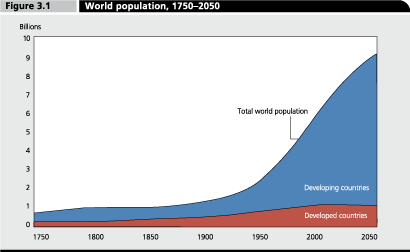
The world population has increased significantly since 1900.
Population growth questions
To do: Population growth questions
Refer to global population 1750 - 2025.
Use annotations to explain the growth of the world population since 1900.
To what extent is population growth occurring in
Developed Countries (MEDC's)
Developing Countries (LEDC's)
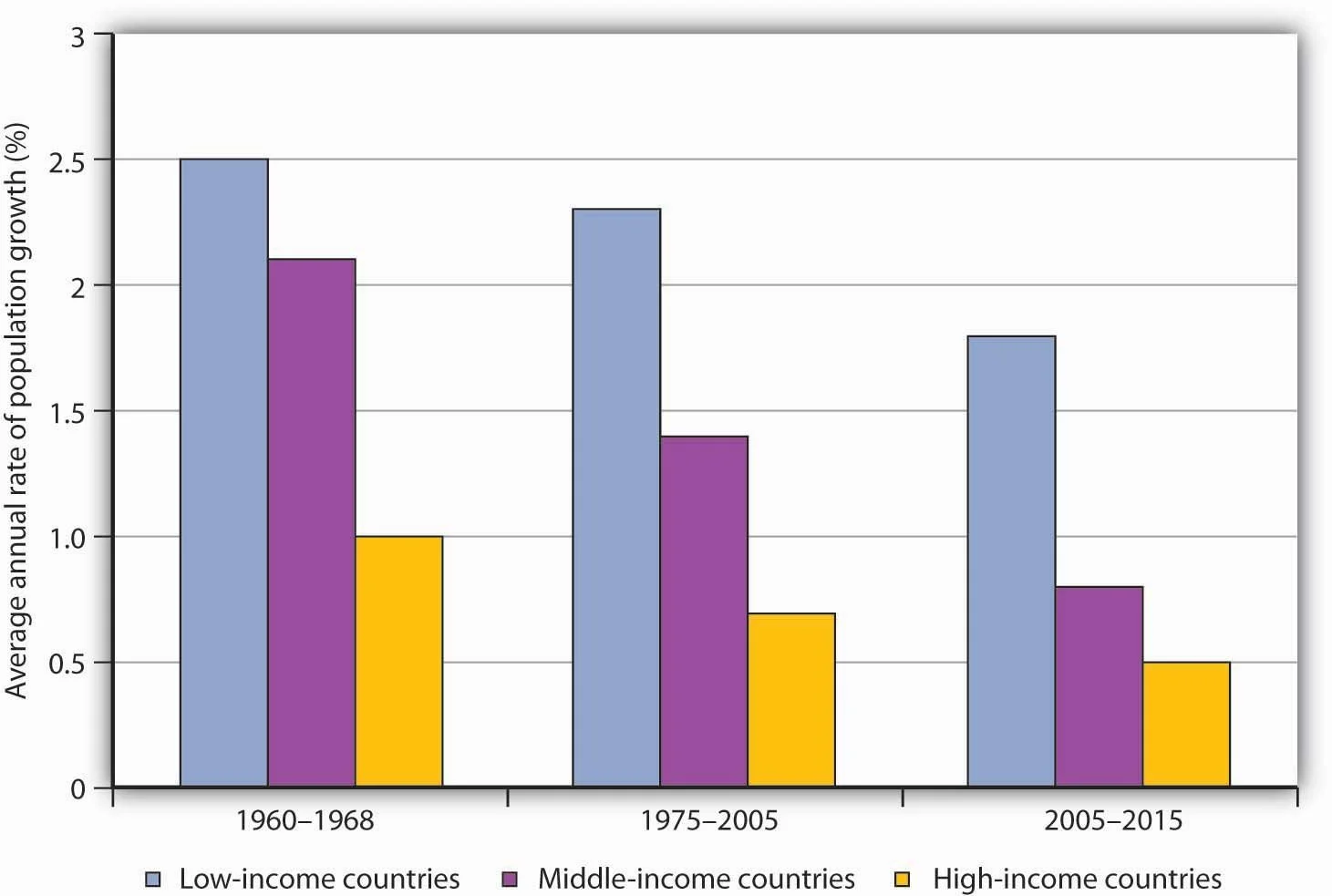
Refer to annual population growth.
Which world regions have the highest rates of population growth?
Which world regions have the lowest rates of population growth
Refer to Fertility rate: Births per woman
Which regions have the highest fertility rates?
Which reasons have the lowest rates?
What is the fertility rate in Nigeria?
Extra
Which global regions can expect the highest urbanisation rates in the future?
List the challenges associated with this growth.
Visualising urbanisation with the pudding project
The world is spiky.
Key drivers of urbanisation. Part 2. Migration
Migration is the movement of a population from one area to another.
Migrations may be forced, voluntary, international or internal.
Urban migration happened in MEDCs from the 18th Century onwards on a large scale. In fact in many MEDCs the movement of people has reversed, and people are moving from urban areas back into the countryside as they search for the quiet life (this is known as counter-urbanisation).
In many LEDCs, cities are experiencing massive rural to urban migration.
The major reasons for this movement can be classified into push and pull factors.
Push factors can either force or encourage people to move away from an area. Push factors can include famine (EG. Ethiopia in the 1980s), drought, flooding (EG. Bangladesh, watch an animation of Dhaka's growth here), a lack of employment opportunities, population growth and over population, and civil war (EG: Syria).
Pull factors encourage people to move to an area. Pull factors include the chance of a better job, better access to education and services, a higher standard of living.
To do: Migration questions
Define migration
List two types of migration
When did the mass urban migrations occur in
MEDC's such as Australia and the USA?
Define counter urbanisation.
Define Push factors using examples
Define Pull factors using examples
Define urbanisation in your own words
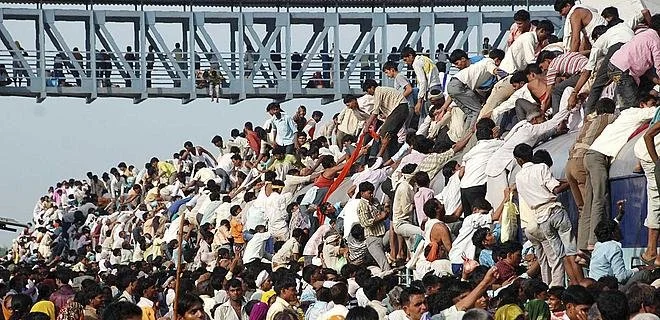
“Urbanisation refers to the process by which people migrate from rural areas to cities and towns, resulting in the growth and expansion of urban areas.”
Urbanisation %
Urbanisation %: The share of a country’s population living in urban areas.
To do: questions
State the urbanisation % in Cambodia in 2025.
State the urbanisation % in Nigeria in 2025.
State the urbanisation % in Bangladesh in 2025
Which countries have the highest urbanisation % ?
Which countries have the lowest urbanisation % ?
Account for the difference?
Describe the global patterns of urbanisation
Think
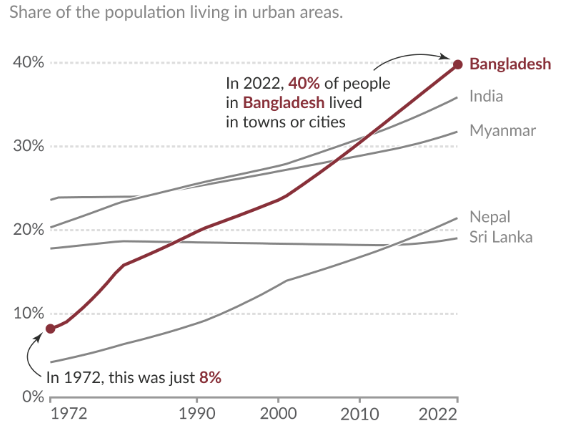
Bangladesh has and is urbanising much faster than it’s neighbours.
Why?
3. Organising the City
Activity 1. Choosing a site
Cities are located where geography provides advantages for trade, transport, resources, defence, or communication. Rivers, coasts, fertile land, mineral resources, and transport routes have historically shaped their location.
Cities continue to grow when they offer economic opportunities, connectivity, and access to people, markets, and services.
Cities start to decline when they fail to provide these opportunities.
To do: questions
Use the video to explain Why cities are where they are.
Activity 2. How do settlements organise themselves?
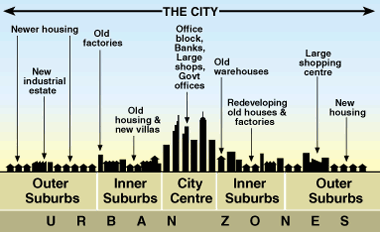
Urbanists use models to explain how settlements organise themselves
An urban area, is a human settlement with a high population density and human structures such as houses, commercial buildings, roads, bridges, and railways.
"Urban area" can refer to towns, cities, and suburbs. An urban area includes the city itself, as well as the surrounding areas.
Land use models have been developed by urban thinkers to explain how urban areas organise themselves.
The structure of a city is determined by its land use.
Land use is determined by price of the land.
Activity 3. City folio
Why are cities where they are?
Have you ever wondered why the world’s cities started where they started? It has a lot to do with water, natural resources, trade routes, the coast, history and being in the northern hemisphere.
If you were to start from scratch, somewhere in Europe or Asia would be a good start. Somewhere close to water and no more than a few dozen kilometres away from the ocean. It would be nice to have some mountains nearby and have a navigable river.
Most urban location theoretical models say that the perfect location for a city would be Dhaka, Bangladesh.
This isn't just theory. If you were to take the locations of every human on earth and average it out, you would end up in South Central Asia.
Apparently, Bangladesh is the optimal place to live
To do: Create a folio that investigates the urban character of a city of your choice. In the process you will identify the reasons why your city is where it is
A brief introduction to your city: including the location (a map) , a brief history, and the function.
Basic data table
City Population
City Urban density
Country urbanisation %
Unemployment %
Crime rate
Average home price
Average rent
Cost of meal for two
Fun Facts and Statistics (including interesting historical and/or current facts about this city)
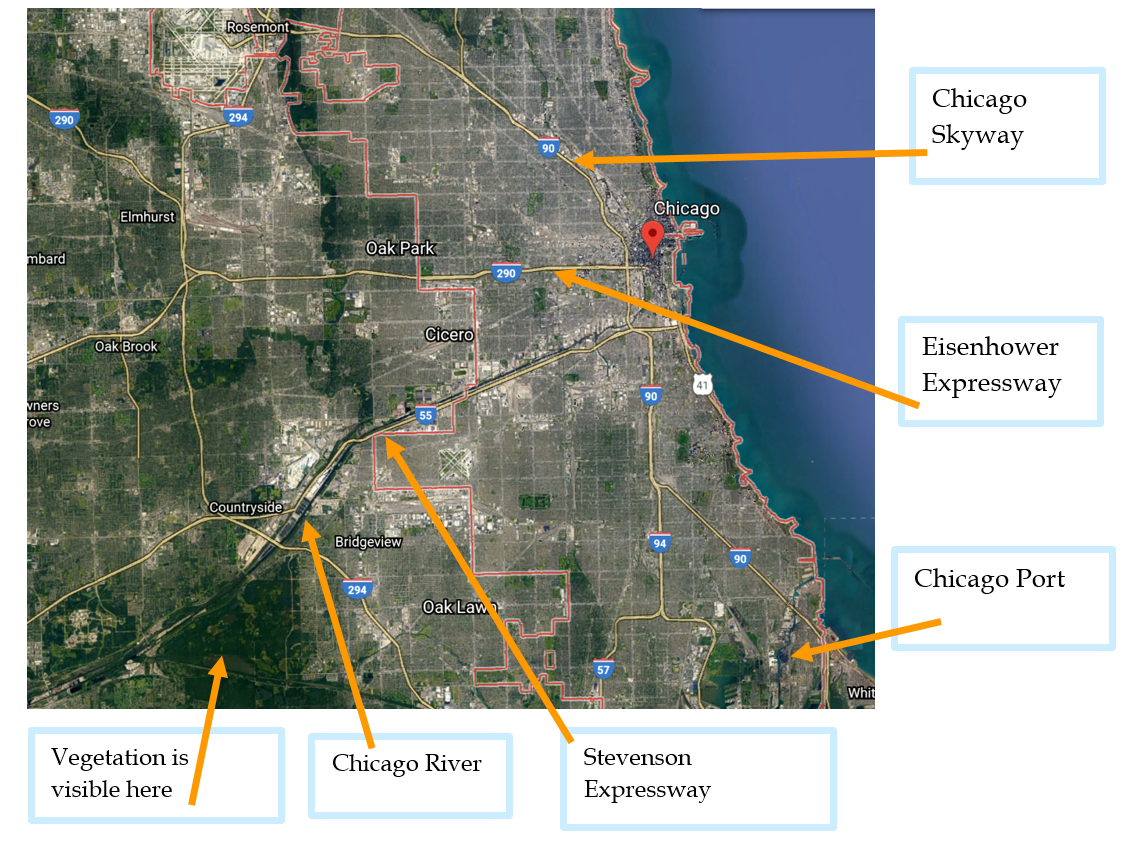
Use annotated satellite photos to explain: Google Earth
The situation. Landforms and vegetation
Identify key land uses (commercial, industrial and residential)
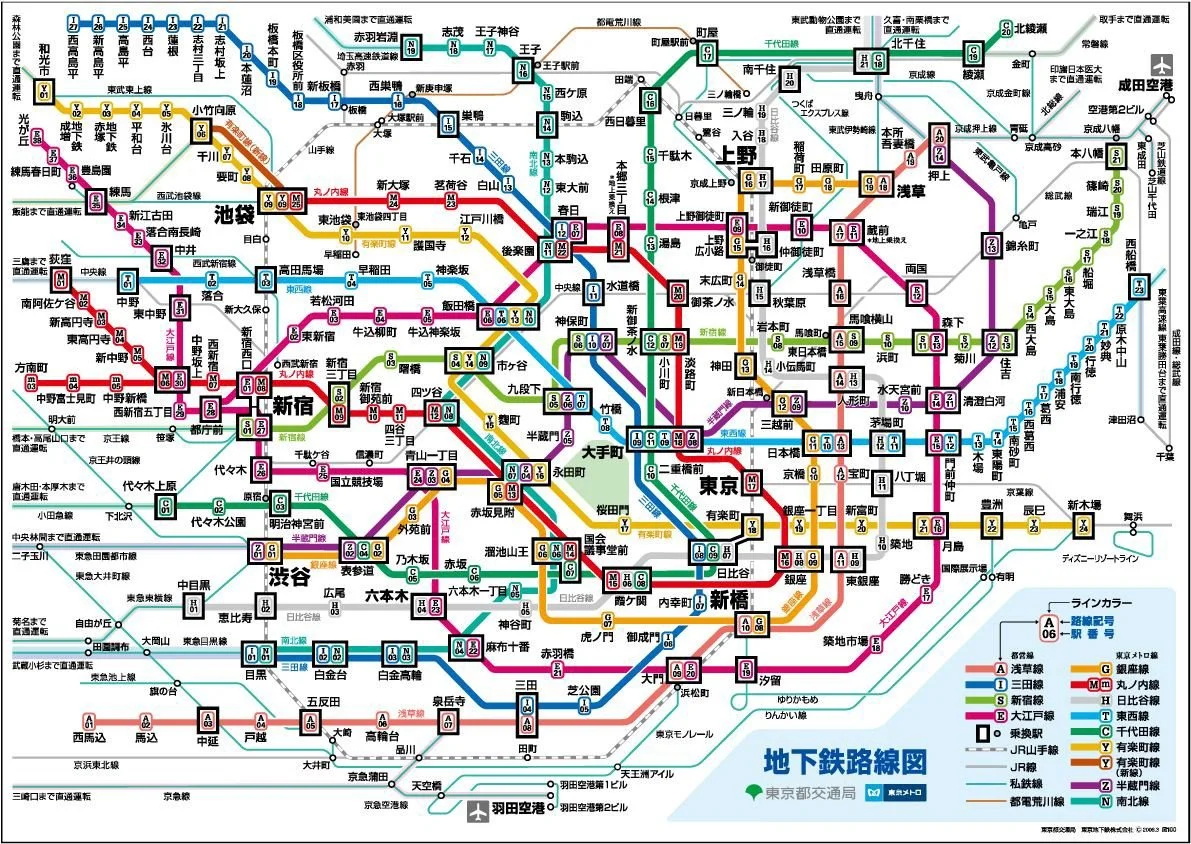
Transport networks - use maps to show how your city is connected to other cities.
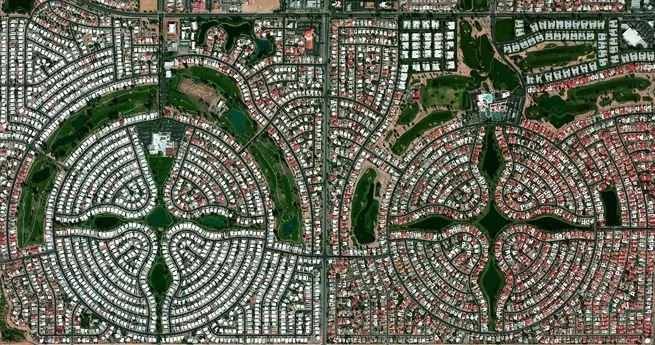
Types of settlement (use images to illustrate your findings)
3 x examples of housing - annotate/label different types of dwelling.
Activity 4. Planning a city
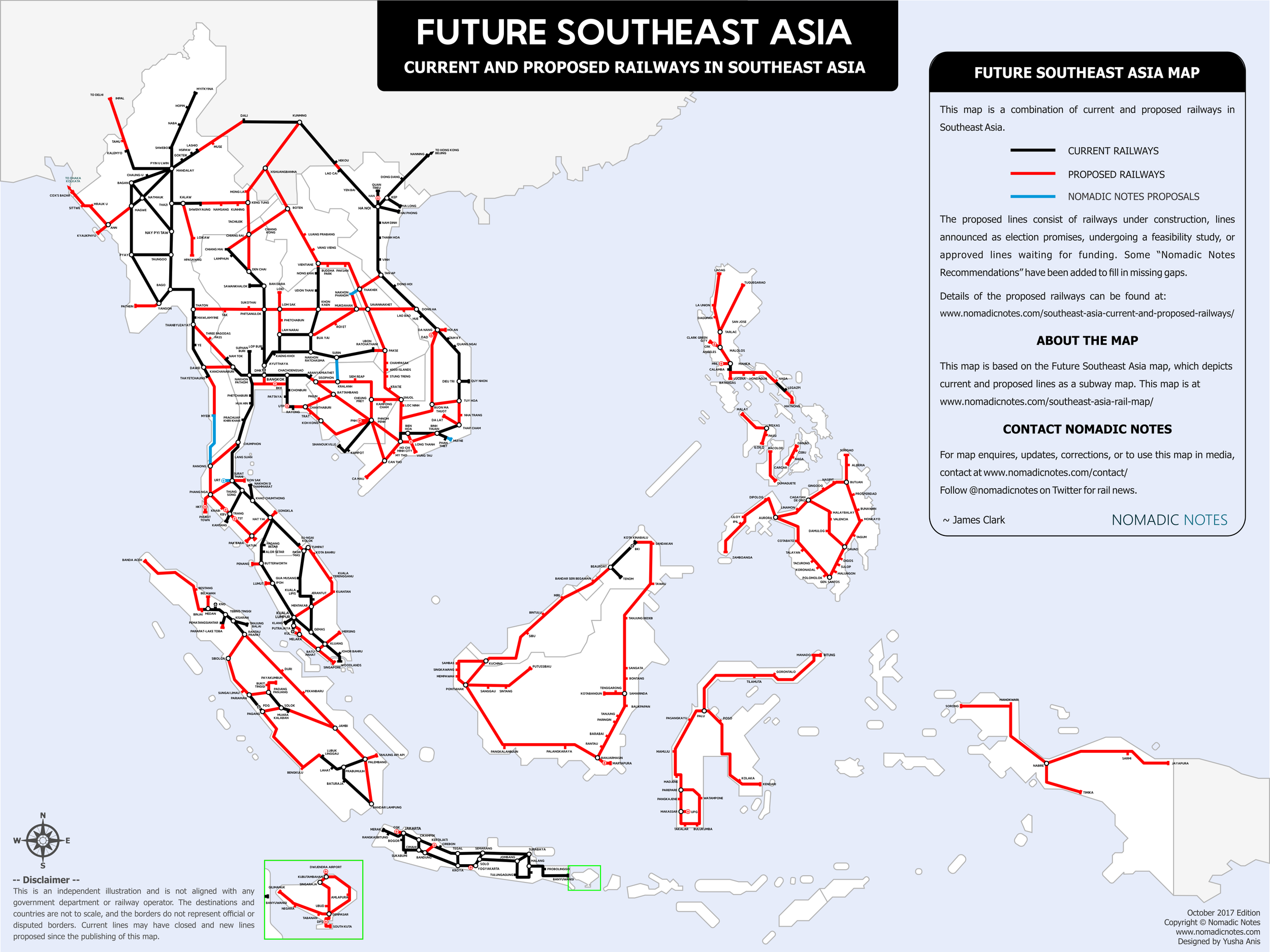
A city of tomorrow for Laos today.
Cities exist because proximity creates value.
When people, businesses and institutions are close together they exchange things more efficiently.
The Laotian government is planning to develop a new city that will be a technology, manufacturing hub reflecting the country's new status as the world's most important producers of high grade copper.
(An essential material for EV and other renewable technology)
To do: Your urban task group has been asked to propose a location for a the new city.
In the country of Laos.
Your proposal will need the following components:
Location
Site analysis
Maps - transport/connection possibilities
Summary of the benefits of the site (connectivity etc.)
Explain how you will reduce the risk of building a new ‘Masdar’.
4. Expansion and Decline
Activity 5. Why do some cities expand?
How would you tell the story of a typical city that is expanding?
Choose a city to examine the causes and impacts of a city in expansion.
To do: Investigate an expanding city
Location. Use a map
Background and history. How did the city start to expand and get rich?
How did the expansion start? What did they replace?
What has happened to the population?
What does expansion look like?
GDP per capita
Services. Metro growth?
Nice things. Parks etc
Future replacements and other sources of ongoing expansion
What is possible in an expanding city?
Activity 6. Why do some cities decline?
embed
To do: Investigate a declining city
Location. (Map)
Background and history. How did the city get rich before the decline?
How did the decline start? What was lost?
What has happened to the population?
What does decline look like?
Economic decline. GDP
Lack of services. Closing and decline
Homicide and crime rates
Drug use and deaths of despair. Media examples
Poverty rates
What can/is being done? Examples of attempts to stem the decline