The Megacity
Megacities. Growth forces adaptation.
Megacities are an adaptation to mass urbanisation, concentrating millions of people, jobs, services and infrastructure within connected urban systems. Their enormous scale can create efficiencies and opportunities, but also produces challenges in housing, transport, inequality and environmental quality. Megacities must continually adapt as populations and demands change.
Asia accounts for over half of today's megacities. By 2030 nearly 9% of the world's population will live in 41 megacities, with India and China having 7 megacities each.
It is predicted that Africa will have some of the highest rates of urbanisation in the future. While European and North American megacities show limited growth, megacities in LEDC’s continue to grow rapidly.
1. Introduction to the urban future. Megacities.
Megacities. Introduction
In 2025, there are approximately 8 billion people in the world, 5 billion in urban and 3.5 billion in rural areas according to Our World in Data.
By 2050, global population is projected to increase to around 9.8 billion.
It is estimated that three million people around the world are moving to cities every week (UN-Habitat, 2019).
The astonishing growth of large urban agglomerations creates challenges for political and community organisations.
To do: What is a megacity
Define a megacity
Annotate a map of the world's major Megacities.
Highlight the largest Megacities and comment on their spatial distribution.
In a table. identify the key challenges of rapid growth of megacities.
Create a four column table with the following headings:
Social: relates to human welfare (e.g. housing, health)
Political: relates to government actions
Environmental: relates to the physical environment
Infrastructure: relates to a city’s built infrastructure
2. Three possible urban futures.
1. Possible urban future: Planet of Slums?
People don't move to slums, they move to the city.
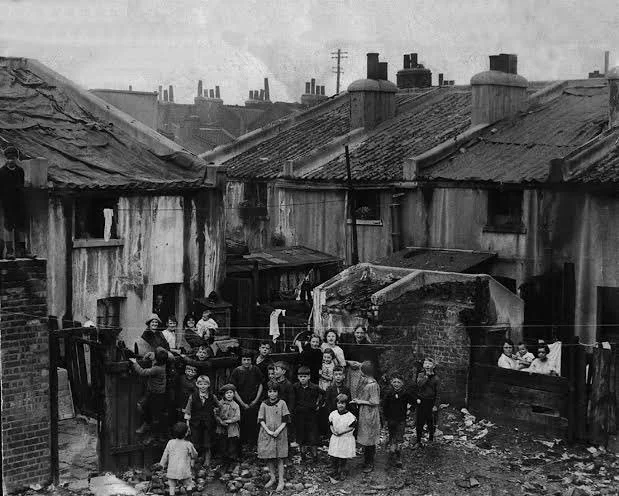
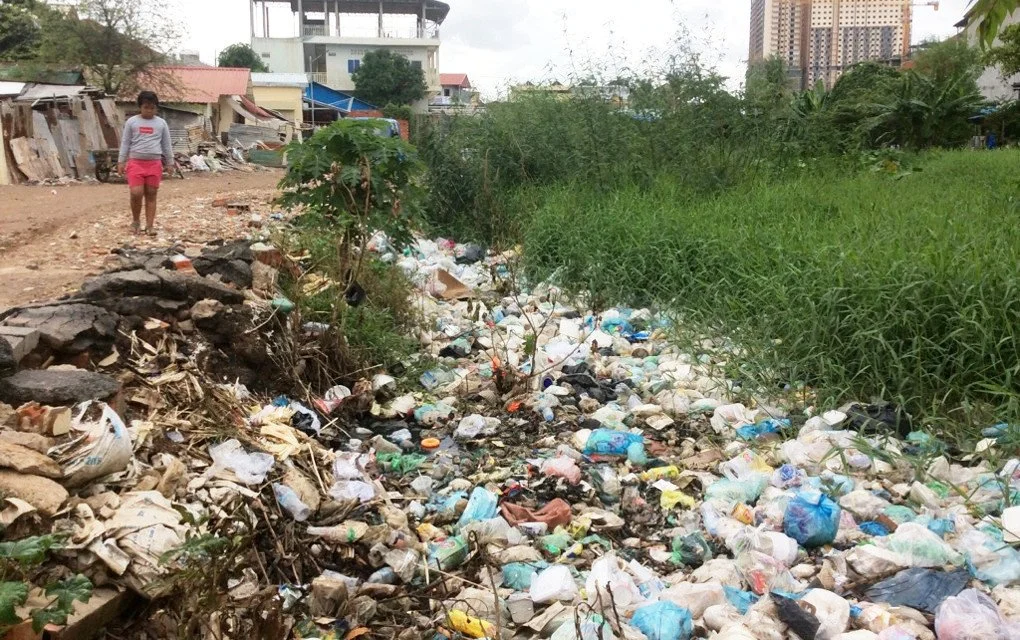
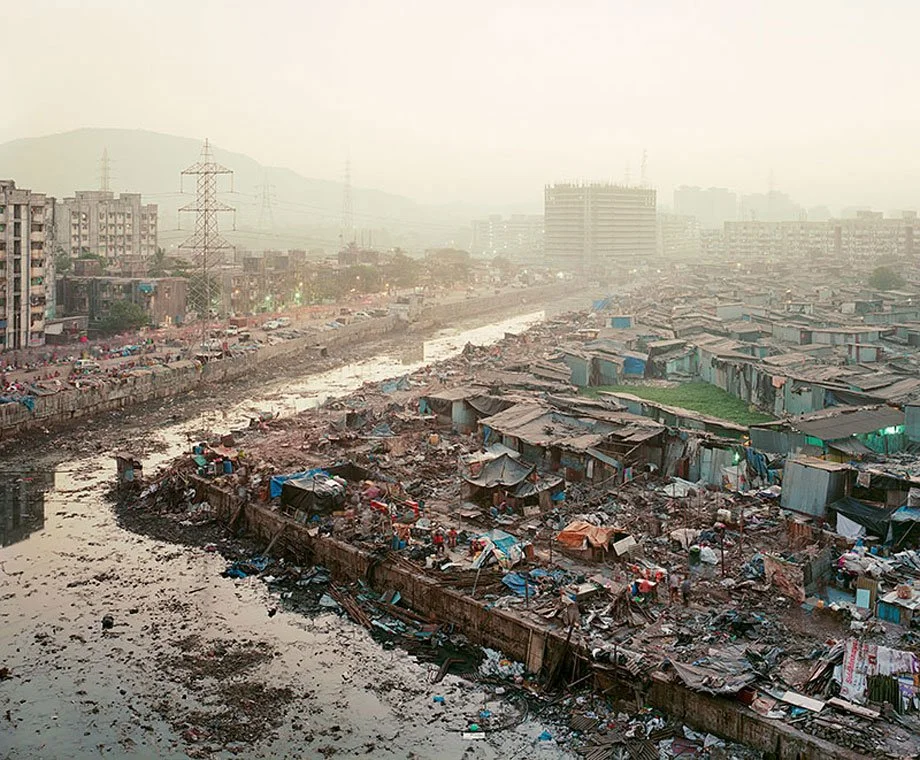
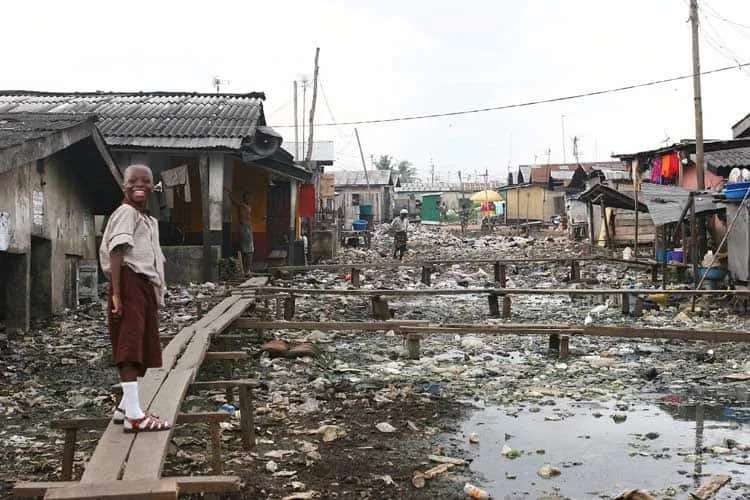
UN habitat defines slums as ' a highly populated urban residential area consisting of densely packed housing units of weak build quality and often associated with poverty. The infrastructure in slums is often in poor condition or incomplete, they are primarily inhabited by impoverished people.
Many urban experts agree that slums can teach us important lessons about the future of an increasingly urbanised world.
▫ In 2008, for the first time, the majority of the world's population lived in cities and towns.
▫ In 2022, 4.52 billion people lived in urban environments and people continue to arrive at the rate of 1 million a week.
▫ The World Health Organisation (WHO) estimates that 876 million of those urban residents are living in temporary housing settlements, often known as slums, shantytowns or informal settlements.
▫ The population of slum dwellers in some of the world's largest cities-Mumbai, Bogotá, and Cairo, for example-now outnumbers the population of people living in formal housing.
By 2030 the number of people living in slums is set to double
Slum dwellers require three things:
1. Access to political representation to reduce vulnerability to corruption.
2. The right not to be evicted (property rights)
3. Recognition of their settlements and activities in the formal economy.1.
Arrival City or Planet of Slums?
'These cities aren't the urban Edens of the future "made out of glass and steel as envisioned by earlier generations of urbanists," but rather they are deeply-impoverished slums, "largely constructed out of crude brick, straw, recycled plastic, cement blocks and scrap wood.'
Planet of Slums
Asia's Fastest Growing Economies Have the Fastest Growing Slums - Bloomberg
Fast-growing emerging economies in Asia are grappling with the conundrum that a boom brings: hordes of villagers flocking to cities only for many of them to end up living in slums.
About 55 percent of the urban population live in shantytowns in Cambodia, 43 percent in Mongolia, 41 percent in Myanmar, and 38 percent in the Philippines, according to World Bank data that covers East Asia and the Pacific. The ratio is more than 20 percent in Vietnam, China and Indonesia, which are among the fastest-growing economies in the world.
The UN estimates that about 2 billion people will be living in slums by the year 2030
In some respects these nations have become a victim of their own success amid massive urbanization, where inward migration is outstripping governments’ ability to supply necessary infrastructure and services. In places like Manila and Jakarta, a dense sprawl of illegal or unplanned housing have sprouted up to offer homes for millions of workers who power their economies.
"Emerging slums are proof that the economy is growing and the opportunities are often in cities," Makiko Watanabe, a World Bank senior urban specialist, said in an interview in Manila. "But governments cannot keep up with providing adequate housing. There is a need to improve land use policies and make housing finance more affordable.
Ten (10) recommendations from the UN for improving life in slums. Discuss
Building low cost residences for slum dwellers
Making clean water available.
Providing proper sanitation and waste management.
Controlling pollution levels.
Providing transport facilities.
Arranging for informal education.
Making credit and finance available as per requirement.
Introducing employment programmes for income generation.
Providing a platform for sharing ideas, inputs and experiences.
Provision of tenancy rights to slum dwellers in order to ensure that their housing is not infringed upon by government agencies.
Arrival City case study
To do: Create a case study examining informal settlements
Define the concept of informal settlements
Annotate a map showing the global distribution of slum settlements.
Use examples to explain why some countries have high slum populations.
Describe the challenges environmental, social and economic, slum dwellers typically face due to their settlement locations.
In what ways does the lack of formal urban planning contribute to the conditions in slums?
What does Bloomberg think squatter settlements are evidence of?
List the articles recommendations for governments to deal with the 'opportunity of emerging slums'.
Select 5 recommendations for improving life in slums from the UN list and explain why you have chosen each one.
Some cities don't have slum settlements, how could the development of slums in an (LEDC) city be considered a good thing?
2. Possible urban future: Megaregions.
When megacities merge.
The world's megacities are merging to form vast "mega-regions" which may stretch hundreds of kilometers across countries and be home to more than 100 million people, according to a major new UN report. The phenomenon of the so-called "endless city" could be one of the most significant developments - and problems - in the way people live and economies grow in the next 50 years, says UN-Habitat, the agency for human settlements, which identifies the trend of developing mega-regions.
The economic importance of Megaregions - The HBR
Nations have long been considered the worlds fundamental economic unit, but that distinction no longer holds true. Today, the natural units and engines of the global economy are cities.
A megaregion is a large network of connected metropolitan regions which account for the bulk of the globe’s economic activity and innovation
Megaregions, at times spanning national borders, form vast zones of trade, transport, innovation, and talent. The world economy is now organised around a few dozen Megaregions. Examples include the Boswash, Boston–New York–Washington corridor, or the Shanghai-Nanjing-Hangzhou triangle, or the span stretching from London through Leeds, Manchester, Liverpool, and into Birmingham.
Fun fact: Ten urban areas account for just 2 percent of global population, but are home to the inventors of 24 percent of the world’s patent applications.
To do: Megaregion case study - The Pearl river Delta
Complete the following questions/activities for an introduction to Megaregions
Define a Megaregion
How do geographers characterise megaregions?
Annotate a map of the world's megaregions
Where are the majority of megaregions located?
Use visual resources (graphs/ maps..) with examples (innovation etc) to show the economic importance of Megaregions.
Use a case study to illustrate the concept.
Megaregions case study - The Pearl River Delta (PRD)
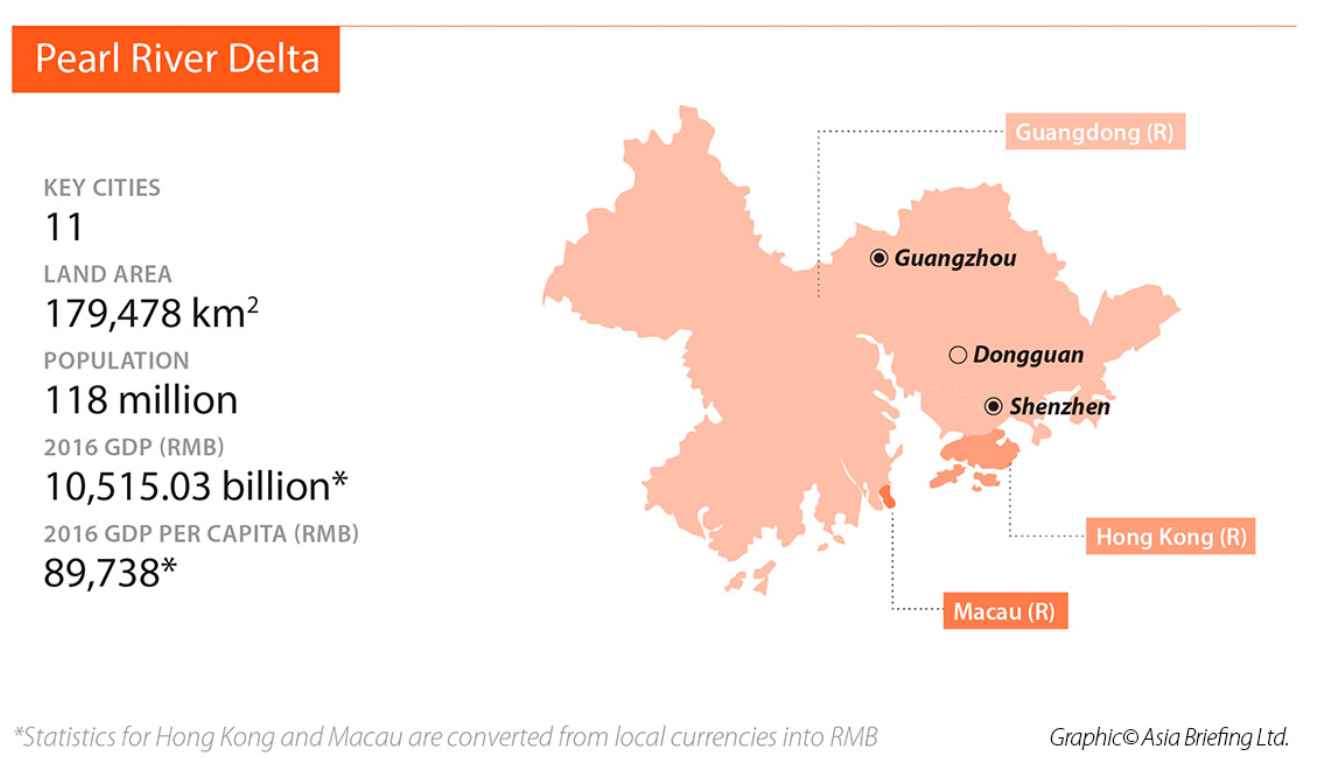
In the late 1970s, the fertile river delta to the north of Hong Kong’s territory was primarily agricultural land. Shenzhen was an unassuming town of 30,000 people – with only one functioning taxi – and China was still a communist, rural country.
The Pearl River Delta is now the world's largest urban area – or megaregion, surpassing Tokyo in population and territory: 60 million residents and 56,000 square kilometres. Its gross domestic product (GDP) totals $1.5 billion, greater than that of Indonesia and equal to 9.1% of China’s output.
China’s Pearl River Delta: Tying 11 Cities into a Megaregion - UrbanLand
The nine cities of the PRD, plus the special administrative zones of Hong Kong and Macau, are becoming increasingly linked by a series of bridges, tunnels, roads, and high-speed rail networks. Today they have a total official population of 60 million, but the actual number is believed to be far higher once unregistered migrants are taken into account.
By 2030, these 11 separate cities will be part of a single urban area with a population that could be as high as 80 million and a gross domestic product (GDP) of more than $2 trillion.
3. Possible urban future. Shrinking Cities
Will a declining world population lead to shrinking cities?
As we have already discussed. Cities have defused the population boom.
When people move to cities, children become a liability. As a result of a reduction in childhood mortality, family pressures and the influence of religion waning, many couples have fewer children and have them later, focusing on education and career instead.
Fertility rates are declining rapidly in most countries. There are exceptions. Egypt is an outlier, as are countries who have accepted significant numbers of immigrants/refugees relative to their population like Germany, Turkey, and Iran.
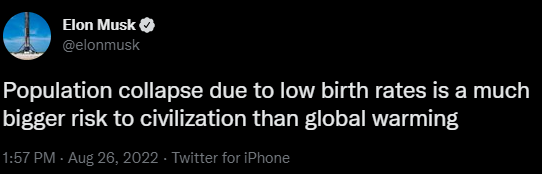
In August 2022 Elon Musk predicted that declining fertility rates (birth rates) were a global risk greater than Global Warming.
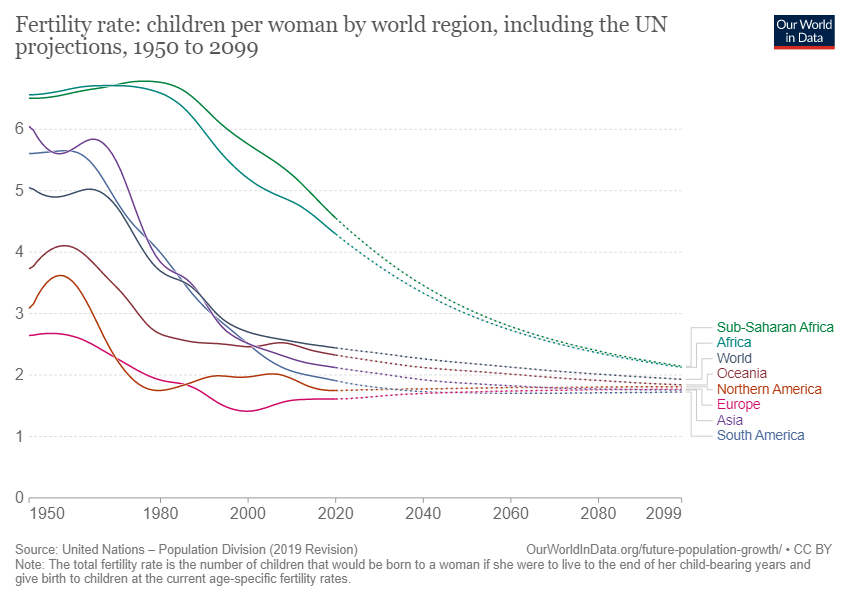
The Fertility Rate measures the average number of children a woman is expected to have in her lifetime.
In 1950, women were having an average of 4.7 children in their lifetime.
In 2025 it was 2.3 births per woman.
If the number falls below 2.1, then the size of a population starts to decline.
G skills.
Describe the trend in the global fertility rate.
Fertility rates are declining. Everywhere
Birth rates are falling much faster than predicted. In 2022, the global fertility rate for Latin America and the Caribbean fell below replacement rate (2.1 babies per woman), India will achieve that status in 2026, and China is expected to be at half their current population within 45 years.
Meanwhile, many countries, ethnicities, and cultures are more advanced on the collapse timeline. 115 countries have a birth rate below replacement rate, containing about half the world's population. including China, Spain and Japan - they are already declining and are expected to see their populations halve by 2100.
South Korea is predicted to hit a birth rate of 0.7 babies per woman within the next two years. A 0.7 birth rate means that, for every 100 Koreans there will be 4.3 great grand kids (35 kids, 12.25 grandkids)
Reasons for the rapidly declining fertility include women's empowerment in education and the workforce, lower child mortality and the increased cost of raising children.
Falling fertility rates mean nearly every country will have shrinking populations by the end of the century.
G skills.
Annotate the global population pyramid.
Annotate an LEDC pyramid
Annotate an MEDC pyramid
This is reflected in urban growth rates.
The world is experiencing rapid urbanisation, but not every city is growing. Population was forecast to decline in 17% of large cities in developed regions and 8% of cities across the world from 2015 to 2025, according to a McKinsey report.
Some cities are already dealing with the challenges of large drops in new births. There are "ghost cities" in China and maternity wards with too few births to justify staying open in Italy. Some South Korean universities have so few students that the government is pressuring them to merge with others. In Japan, entire towns where deaths outnumber births are being closed.
To do: Shrinking cities questions
Use a graph of global population projections to 2100 to describe the population trend.
Use evidence to explain how cities have ‘defused the population bomb’.
Use evidence from the source to explain how declining fertility rates are impacting urban growth rates.
3. Why can’t growing LEDC Megacities be more like Tokyo?
What makes Cities fragile?
Rapidly growing megacities in LEDC’s struggle to meet the needs of their growing populations because effective planning depends on strong institutions.
Corruption, insecure property rights and large informal economies are interconnected symptoms of weak governance.
Together, they limit taxation, investment, regulation and long term planning, making coordinated urban development difficult despite rapid population growth.
Below is an introduction to these three challenges.
1. Corruption. A short introduction
According to Transparency International, corruption is the abuse of entrusted power for private gain. Urban corruption can hinder city planning, stop the equal distribution of public investments and services, and capture urban management processes to the detriment of the public.
Corruption can involve anyone: politicians, government officials, public servants, business people or members of the public.
'Corruption erodes trust, weakens democracy, hampers economic development and further exacerbates inequality, poverty, social division and the environmental crisis.'
Corruption means less money for:
Health
Education
Sanitation
Public transport
Public housing
Water infrastructure
Development
There is a financial and development cost to all of this corruption
The World Economic Forum estimates the global cost of corruption is at least $3.6 trillion, or 5 per cent of the annual global gross domestic product (GDP).
They also estimate that tax revenues are higher in countries with lower levels of corruption. Less corrupt governments collect 4 percent of GDP more in taxes than those at the same level of economic development with higher levels of corruption.
According to the World Bank, the average income in countries with a high level of corruption is about a third of that of countries with a low level of corruption. Also, the infant mortality rate in such countries is about three times higher and the literacy rate is 25% lower.
Example: Africa: Corruption in Nigeria’s oil sector - North Africa Journal
'Nigeria’s anti-graft agency said Tuesday it had filed corruption charges against a former justice minister over a $1.3 billion dollar oil scandal involving international oil majors Shell and Eni. Mohammed Adoke was arrested last month on arrival from the United Arab Emirates where he had been detained on a Nigerian warrant. In Nigeria, corruption includes the wholesale looting of state assets. That is seen as altogether different from the policeman at a checkpoint asking a motorist, “What do you have for me today?”
To do. Corruption questions
Define corruption.
Outline the reasons corruption can negatively impact the development of cities and the provision of public services.
Identify three examples of public corruption.
List the financial and development costs of corruption?
How does the Borgen Project recommend that countries can tackle corruption?
What does the corruption perceptions index measure?
Record the corruptions scores for 5 LEDC's
Corruption perception index - Transparency International.
Ending corruption with the Borgen Project
Make Bureaucracies More Efficient
Corruption thrives when government officials can take advantage of inefficient institutions and bureaucracies. Poorly managed public sectors make sidestepping rules easy for these politicians and officials.
Make Elections More Transparent
Corrupt government officials can usually find ways to stay in office. Making elections more transparent can make it harder for corrupt politicians to stay in power.
Increase Civic Education
Voters need to understand what corrupt official and politicians are doing. Civic education is vital to this goal.
2. Property Rights. A short introduction
Property rights allow the owner of a property to show legal title to property. In MEDC's like Australia, there is a well developed legal system that allows people to prove title to their assets or capital. Assets include housing, business's and land. When people in MEDC's need to borrow money, they can use the title to these assets to support a bank loan and used to purchase or build more assets.
In LEDC's like Kenya, the legal system has failed or is unable to recognise the ownership of property, land and businesses. So people in LEDC's are unable to prove their ownership of this capital. For this reason, they are unable to use their capital to borrow and expand their business’s and other assets. Their assets remain unvalued, in the grey zone between the formal and the informal economy
Dharavi, India
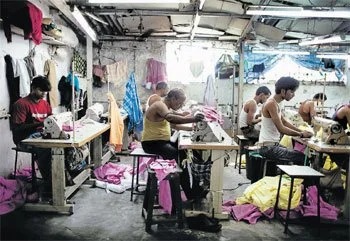
At the edge of India’s greatest slum, Shaikh Mobin’s decrepit shanty is cleaved like a wedding cake, four layers high and sliced down the middle. The missing half has been demolished.
What remains appears ready for demolition, too, with temporary walls and a rickety corrugated roof. Yet inside, carpenters are assembling furniture on the ground floor. One floor up, men are busily cutting and stitching blue jeans. Upstairs from them, workers are crouched over sewing machines, making blouses. And at the top, still more workers are fashioning men’s suits and wedding apparel.
1 crumbling residence. 4 businesses. 0 property rights.
To do: Write a 300 word article for the Belair Bugle explaining the need for property rights in informal settlements. Include the following points.
What are property rights.
What are the barriers to people in LEDC's having property rights?
How does this lack of property rights prevent the creation of capital (assets)?
Explain the reasons why people have had their 'homes destroyed up to ten times'.
Suggest 2 solutions to landlords gouging tenants with high rents.
How does the lack of property rights impact the provision of government services?
3. The informal economy. A short introduction
There is a need to change the perspective that slum-dwellers are a burden for the government and for the society, Watanabe said.
"They offer a lot of jobs required in cities, they generate a lot of economic opportunities but they aren’t captured very well because they are in the informal sector," she said. "But in fact they are the backbones of the economy."
What is the Informal Economy?
For many poor people in urban areas, the primary means of economic survival is the production or sale of goods or services through semi-legal or illegal ventures, known as the informal economy. Conservatively, informal employment accounts for half to three quarters of all non-agricultural employment in developing countries: 48 % in North Africa, 51 % in Latin America, 65 % in Asia, and 72 % in sub-Saharan Africa.
Informal economy case study - Dharavi. India
Dharavi is an informal community in Mumbai. It is built on a former mangrove swamp that later was settled as a fishing village. Now it is home to nearly 1 million people 60,000 structures, many of them shanties and thousands of businesses and factories .
Experts estimate that the informal sector is responsible for the overwhelming majority of India’s annual economic growth and as much as 90 per cent of all employment. The informal economy exists largely outside government oversight and, in the case of slums like Dharavi, without government help or encouragement.
“This is a parallel economy,” said Mobin, whose family is involved in several businesses in Dharavi. “In most developed countries, there is only one economy. But in India, there are two.” India is a rising economic power, even as huge portions of its economy operate in the shadows.
To do: Create an infographic in five (5) parts that explains the informal economy.
What is the informal economy? How does it differ from the formal economy?
List some examples of jobs within the informal economy.
Outline the main reasons for the development of an informal economy.
Identify three disadvantages of the informal economy. Justify your answer with examples.
Suggest two ways that people could be integrated into the formal economy more effectively.
4. Urban solutions
Solutions to urban fragility.
To do. Present a solution to a cause of urban fragility
Part 1. The impact
Briefly describe the issue and its impacts using statistics and quotes.
Ensure you use the definitions IE Access to safe drinking water is defined as …..
Visual resources including graphs to illustrate the issue.
EG If you are talking about access to fresh water you could include a graph of the incidence of water borne disease.
Also a map, newspaper cartoon or street art if you can find it.
Part 2. The solution
Very important! You need to identify an actual solution that has been successfully implemented.
EG. A program to provide water access in Kigale, Rwanda.
Briefly summarise the solution / program.
Why did it work?
Are there ongoing challenges?