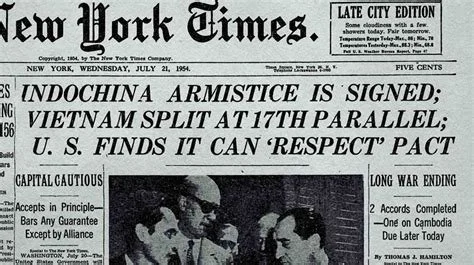
Vietnam 1971 - 1975
After 1971, the character of the Vietnam War shifted as peace talks in Paris progressed and the United States began withdrawing troops under the policy of “Vietnamisation.” American involvement declined, while South Vietnamese forces took on greater responsibility for fighting. The conflict increasingly became a conventional war between North and South Vietnam, with large-scale offensives replacing earlier guerrilla dominance.
Despite ongoing negotiations, fighting intensified, particularly during the 1972 Easter Offensive. The war became a struggle for advantage before any final settlement. Although the Paris Peace Accords were signed in 1973, conflict continued between North and South Vietnam until Saigon fell in 1975.
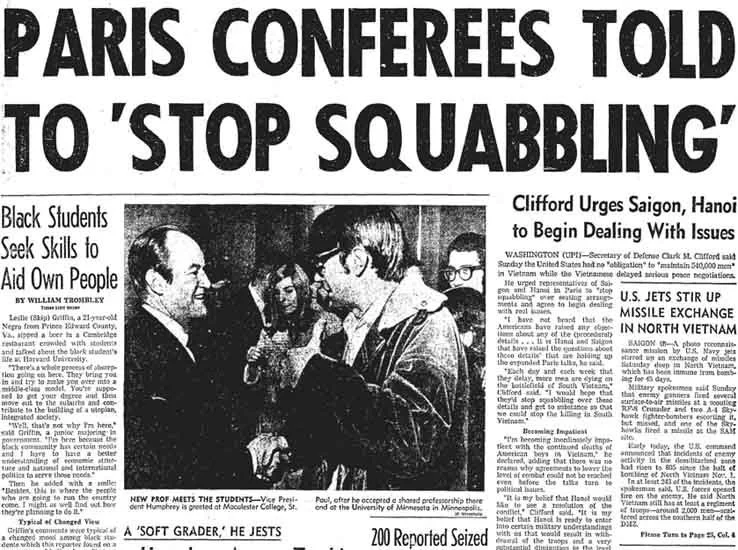
Arthur Calwell on the Australian involvement in Vietnam. 1966
Arthur Augustus Calwell served as the leader of the Australian Labor Party from 1960 to 1967. He led the party through three federal election defeats.
We do not think it is a wise decision. We do not think it will help the fight against Communism. We do not believe it will promote the welfare of the people of Vietnam It is a gross and misleading over simplification to depict this war in simple terms of military aggression from the North. The war in South Vietnam is a civil war, aided and abetted by the North Vietnamese Government to exhaust our resources in the bottomless pit of jungle warfare, in a war in which we have not even defined our purpose honestly, or explained what we would accept as victory, is the very height of folly and the very depths of despair.
Humiliation for America could come in one of two ways, either by outright defeat, which is unlikely, or by her becoming interminably bogged down in the awful morass of this war, as France was for ten years. That situation would in turn lead to one of two things. Withdrawal through despair, or all out war through despair. Australia's aim should have been to help end the war, not to extend it.
Questions
What, according to Mr Calwell, was the real nature of the war?
Describe the two possible outcomes Mr Calwell saw for the US if they stayed in Vietnam.
How were Mr Calwell’s predictions correct?
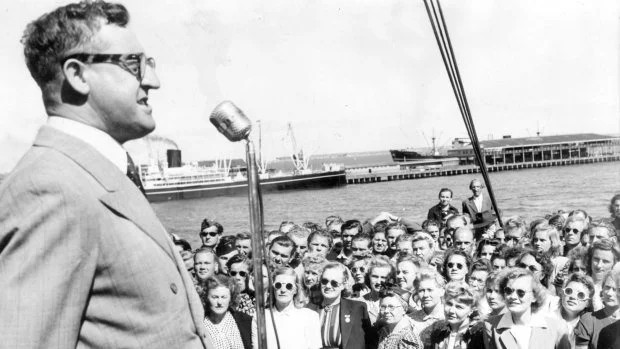
1. Protesting the War
Bob Muntz joins the Australian draft resisters. The Age. 2005
In early March 1972, Bob Muntz received a call at work. A couple of Commonwealth Police had turned up at the workplace of an acquaintance and arrested him for refusing to obey his army call up notice. Tomorrow, thought Muntz, would be good day to take a sickie. so, when the coppers arrived next morning, he was nowhere to be found.
For the next nine months, until the election of the Whitlam Government, Muntz disappeared into the underground, avoiding the authorities by shifting from refuge to refuge. But for most of that time, he and similar Draft Resisters Union fugitives employed the strategy of hiding in plain sight. 'The idea was to circulate as widely aS possible in the community, to be in one sense as visible as possible, but not to get yourself arrested,' he recalls. '[We were' uncatchable because we had widespread community support, and the idea was to make that point.' so Muntz would pop up at anti-war protests, union meetings, even the occasional news conference, give short speech and vanish out the back door.
Muntz was a gradual and, in the beginning, reluctant convert to anti—Vietnam War activism. He went to his first demonstration just before the '66 election and was drafted when he turned 20, the following year. At the end of 1971, he was prosecuted for failing to attend a medical examination to enter the army. 'l duly got my seven-day jail sentence and did it in Pentridge ' The experience played a large role in defining his character: 'And it radicalised me it wasn't just a matter of opposing Australian involvement, we supported the Vietnamese. I remember rallies where I shouted, with everyone else: 'One side is right, one side is wrong. Victory to the Vietcong.
l don't think there's any dispute that the Vietnam experience did change Australia for the better,' he says. 'The Vietnam War was perhaps the main spark, with the whole social movement of the '60s and '70s that converted Australia into a more tolerant, liberal society, willing to question authority and find our own place in the world.'
Questions
Explain why this draft resister had to avoid the Commonwealth police 'until the election of the Whitlam Government'.
Why would he and other draft resisters avoid the police yet 'pop up at anti-war protests, union meetings, even the occasional news conference, give a short speech and vanish out the back door'?
According to this source, did anything positive come out of the Vietnam War experience?
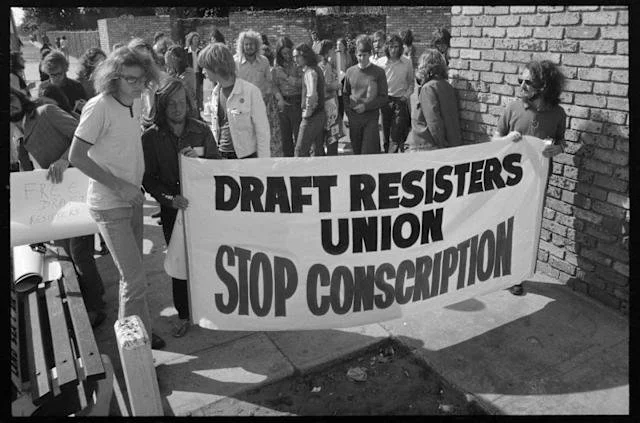
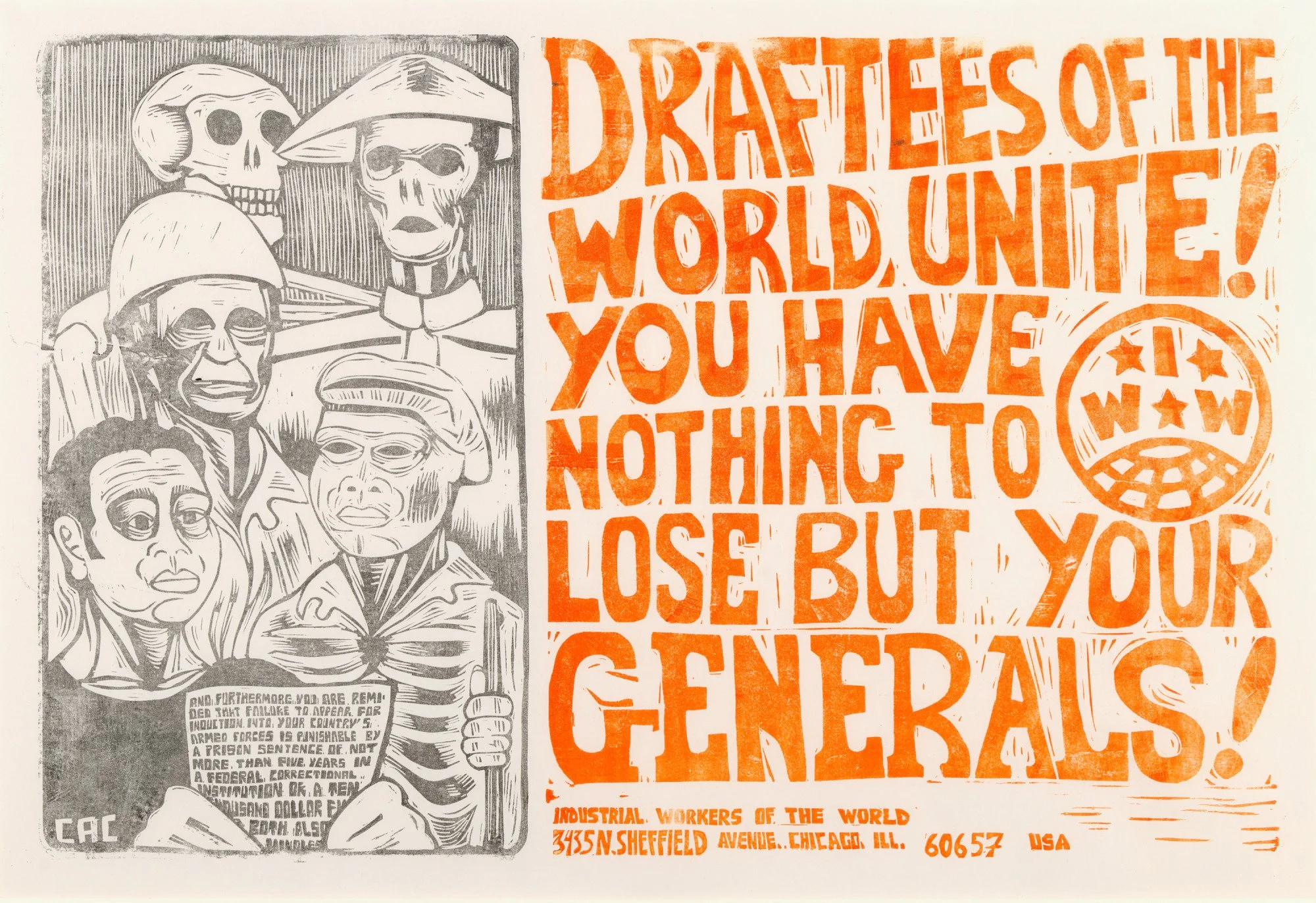
The Vietnam War sparked significant protest movements in both the US and Australia during the 1960s-70s. Both countries utilised conscription (the draft in the US, National Service in Australia), which fueled opposition. Anti-war movements in both nations incorporated civil disobedience, draft resistance, and public demonstrations.
In the US, demonstrations began on college campuses and grew into a nationwide movement encompassing diverse groups. The 1969 Moratorium mobilised millions, while the Kent State shootings in 1970 further inflamed opposition.
Australia had similar resistance to the conflict. The Save Our Sons movement, comprised primarily of mothers of conscripts, gained prominence. As did the 1970 Moratorium marches that drew hundreds of thousands across Australian cities.
The protests fundamentally changed political landscapes in both countries, contributing to policy reversals, leadership changes, and leaving lasting impacts on how citizens engage with foreign policy decisions.
"The anti-war movement in Australia fundamentally reshaped our national identity and political landscape. It marked the first time Australians en masse questioned their government's foreign policy decisions and military commitments. The moratorium campaigns not only helped end Australia's involvement in Vietnam but also catalyzed a broader cultural shift toward greater political activism, independence from great powers, and skepticism of military solutions. This period transformed how Australians viewed their place in the world and their relationship with authority."
— Dr. Michelle Arrow, Professor of Modern History at Macquarie University
To do: questions
Use 5 anti war posters as sources to describe the protest movement against the war.
Discuss: How did the protest movement influence the conduct of the war and the peace negotiations?
According to James Lindsay, Protest songs provided a window into the mood of anger, alienation, and defiance in the anti-Vietnam War movement.
To do: Prepare a MULTIMEDIA presentation examining how music impacted the protests against the Vietnam War.
Choose a Vietnam era protest song that appeals to you the most.
Explain why you have chosen the song.
What is your chosen song about?
What contribution did protest music make to the anti-Vietnam War peace movement?
2. The War Turns. 1968 - 1972
Peace talks open, fighting continues
After the Tet Offensive, President Johnson faced increased antiwar sentiment and political pressure to end the conflict. In March 1968 he ordered an end to the bombing of North Vietnam. Peace talks were quickly deadlocked. The ground war intensified, with the conflict’s fiercest fighting.
In 1968, Richard M. Nixon, was elected, he and Kissinger his Secretary of State, recognised that the US could not win the war. They insisted on an “honourable” peace settlement that would give South Vietnam a reasonable chance for survival. A hasty withdrawal, they contended, would damage U.S. credibility internationally.
Nixon began to gradually withdraw U.S. ground troops in 1969, a program called Vietnamisation, that transferred control to South Vietnamese forces. The troop withdrawals were popular among the American public. The U.S. soldiers still in Vietnam, saw the withdrawals as an admission of the pointlessness of the war. Morale among the troops was already low. Major problems included drug abuse, desertion, and even violence against officers.
When Nixon wrote his memoirs he recognised the weakness of Vietnamisation.
‘The real problem was that the enemy was willing to sacrifice in order to win, while the South Vietnamese simply weren’t willing to pay that much of a price in order to avoid losing.’
During this period, Nixon resumed the bombing of North Vietnam and expanded the secret bombing in Cambodia and Laos and authorised U.S. and South Vietnamese forces to operate in Cambodia. This added to American public opposition to the war and caused the peace talks to stagnate.
In 1972 the North mounted a large invasion of the South. But it failed.
To do: Vietnamisation. Its your war now.
Use your own research to write a paragraph that explains the strategy of Vietnamisation. What was the US trying to achieve with this new policy?
Background Briefing: The secret bombing of Cambodia. 1965 - 73
The Ho Chi Minh Trail was a vast network of jungle paths and roads running from North Vietnam through Laos and Cambodia to South Vietnam. It was a crucial supply route for North Vietnamese forces, allowing them to transport troops, weapons, and supplies
In response the US began Operation Menu. A massive bombing campaign in Cambodia and Laos.
Between 1965 and 1973, the American air force dropped nearly three million tonnes of bombs on Cambodia at 113,716 sites. To put this in perspective, the Allies dropped 2 million tonnes in all of WW2, including Hiroshima and Nagasaki. Cambodia may be the most bombed country in history.
The Americans were trying to prevent the Vietnamese supplying the insurgency in South Vietnam from the Ho Chi Minh trail.
Not very fun fact: The scale of the bombing and the resulting devastation and social dislocation is linked to the rise of the Khmer Rouge who had limited support before the war.
Sites bombed by US in Cambodia 1965 - 73
To do: Annotate a satellite image/map of the US bombing campaign in Cambodia using the link.
What were the strategic objectives of the bombing campaign in Laos and Cambodia?
How did this campaign contribute to the rise of the Khmer Rouge and the fall of the Lao monarchy?
What were the reasons the US government kept the bombing campaign secret?
3. Sources - Vietnam Peace Talks
After the defeat of their invasion in 1972 at the hands of the ARVN, the leaders of North Vietnam signalled a compromise. The two sides began to negotiate a peace treaty. Stalled talks led to extensive bombing of North Vietnamese cities.
The Paris Peace Accords were formally signed on the 27th of January 1973. U.S. troops left Vietnam by the end of March. The United States began cutting military and economic aid to the South.

10 Sources Analysis Answer Guide
Don’t forget: Quote often and begin your response with name of the author, not the Source number. Put the source number in brackets at the end of the quote/paraphrasing.
For example:
This is supported by Jones who states that 'History students would be more popular at parties if they used this method.' (Source 3)
More successful responses:
contain relevant evidence (quotes and observations) from sources when required.
Less successful responses
provide responses without reference to any evidence from the source
state that sources are limited without explaining why using evidence
do not assess the nature of sources clearly
do not explain how the nature and origin of the sources are a strength or limitation
do not include the source in the response.
Source 1. Vietnam Peace Talks. Alpha History
One significant problem was that the United States and North Vietnam approached peace talks with different objectives. For the Americans, the peace process was a way of extricating themselves from Vietnam, while avoiding the humiliation of defeat. For the North Vietnamese, whose ultimate goal was national reunification, peace talks were another military tactic, a device to obtain breathing space while denying and frustrating the enemy.
Questions
Using evidence from the source. Contrast the objectives of the USA and North Vietnam. (2)
Source 2. North Vietnamese Peace Proposal (excerpt). April 1965.
The internal affairs of South Vietnam must be settled by the South Vietnamese people themselves, in accordance with the program of the NLF, without any foreign interference.
The peaceful reunification of Vietnam is to be settled by the Vietnamese people in both zones, without any foreign interference.”
Questions
According to the source, what were the primary demands of the North Vietnamese? (2)
Source 3. Where the Domino fell. J.S Olson 2008
“Kissinger knew that the United States could not simply declare it a mistake and withdraw. Other US commitments in the world would then be brought into serious question. The US needed to get out of Vietnam with its credibility intact, something Nixon called ‘peace with honour’. The Paris peace talks, Kissinger was certain, would never achieve that goal. They were too public, too exposed to media scrutiny, and too politicised. The US needed to maintain pressure on North Vietnam”
Questions
What were Kissinger’s views on the value of the Paris Peace Talks? (2)
Source 5. The US bombing campaign 1968 - 1973. J Olson 2008
The US bombing campaigns were intended not only to attack and weaken the enemy, they were also to show north Vietnam that the USA would not be forced out of the war and would not abandon South Vietnam. Eventually, they had their effect – in January 1973 peace talks in Paris were resumed.
Questions
How does the information in Source 5 support the information in Source 3? (4)
With reference to all of the sources. Respond to the statement.
‘The US deliberately prolonged the war to avoid the humiliation of defeat’.
Source 4. Where it stops, nobody knows! 1972 The Washington Times
Nixon began to gradually withdraw U.S. ground troops in 1969, a program called Vietnamisation, that transferred control to South Vietnamese forces
Questions
How useful is a cartoon for an historian studying the Vietnam peace process? (4)

Source 4. Where it stops, nobody knows!’
4. The End
The fall of South Vietnam in 6 points. Alpha History.
In March 1972 North Vietnam launched a massive offensive, which aimed to capture one-third of South Vietnam.
Hanoi hoped this would strengthen the North’s bargaining position at the Paris talks while impacting US public opinion.
The Paris Peace Accords were formally signed on the 27th of January 1973. U.S. troops left Vietnam by the end of March. The United States began cutting military and economic aid to the South.
The offensive failed, falling short of its objectives due to inadequate numbers, ARVN resiance and US air cover.
In 1973 Hanoi signed a peace agreement with the US, which eventually led to the cessation of American bombing.
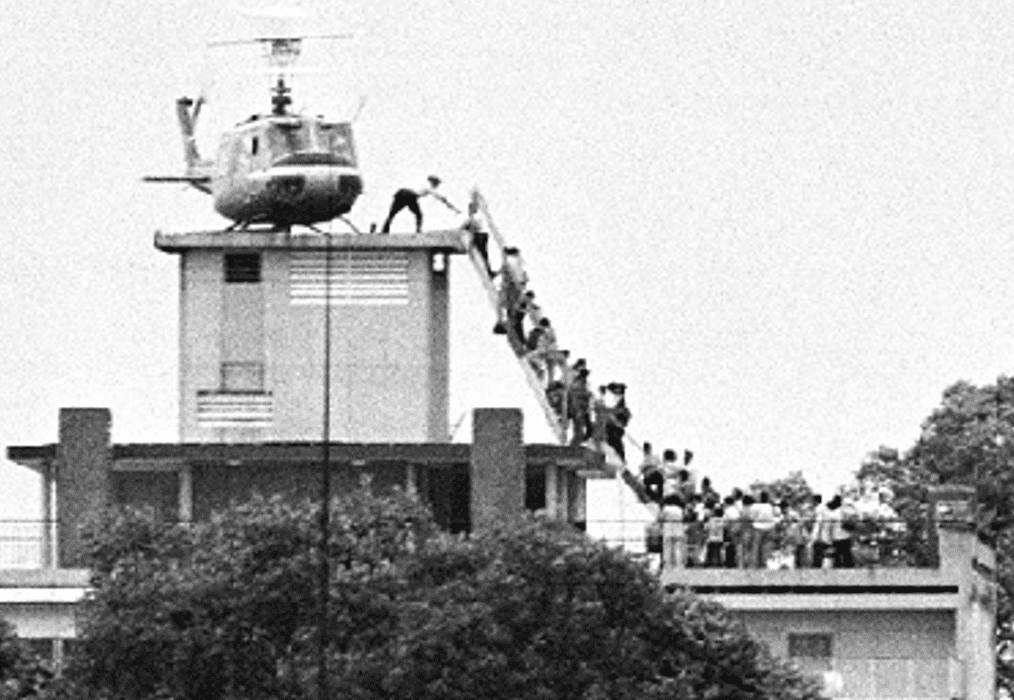
In early 1975, the North Vietnamese launched a major invasion, they expected it to take two years. However, within two months, South Vietnam surrendered (April 30, 1975), as Northern troops entered Saigon.
On April 21st the distressed South Vietnamese president Nguyen Van Thieu appeared on Saigon television to announce his resignation. Thieu gave a long and disjointed speech, much of it lambasting the United States for its treachery and broken promises.
“At the time of the [Paris] peace agreement, the United States agreed to replace equipment on a one-by-one basis. But the United States did not keep its word. Is an American’s word reliable these days? The United States did not keep its promise to help us fight for freedom, and it was in the same fight that the United States lost 50,000 of its young men … The United States has not respected its promises. It is inhumane. It is untrustworthy. It is irresponsible … You ran away and left us to do the job that you could not do.”
To do. Choose a question to research and report back to the class.
Prepare a 2 minute presentation on one of the following questions.
Was the fall of Saigon inevitable after the Paris Peace Accords of 1973?
How effective was North Vietnam’s final offensive in bringing about victory?
What role did South Vietnamese leadership and morale play in the collapse?
Why did the United States choose not to intervene militarily in 1975?
What were the immediate consequences of the fall of Saigon for Vietnam and Southeast Asia?
5. Conference. After the Game.
Why did the United States fail to achieve its goals in Vietnam?
A conference to examine the key reasons why the United States was unable to achieve its goals in the Vietnam War.
Prepare your notes for discussion of the following key questions:
Was the US military prepared for the type of war fought in Vietnam?
Did North Vietnam win because of better strategy or stronger determination?
Could the US have succeeded with a stronger South Vietnamese government?
Did public opinion determine the outcome of the war?
What now for South East Asia?