Water in the World
The Water Cycle
Water can be found in the ocean, on land and in the atmosphere.
The water cycle is the path that all water follows as it moves around our planet.
The Water Cycle
How does water travel from a glacier to the ocean to a cloud?
That’s where the water cycle comes in.
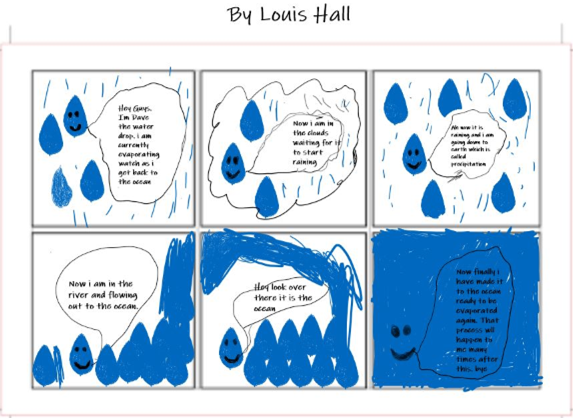
Activity 1: The Life of a Water Droplet
Have you ever thought about the life of a water droplet, constantly moving and changing forms?
Write a story about a water droplet as it travels through the water cycle. The only rules are:
Include the three primary processes of the water cycle (evaporation, precipitation, and condensation)
Make sure the droplet completes the water cycle and finds its way back to the ocean
Be creative.
Activity 2: River landforms
Rivers are vital to the water cycle, carrying drainage from precipitation, as sources of evaporation, feeding groundwater, sustaining ecosystems and human life.
Rivers shape landscapes through youthful, mature, and old stages: steep youthful rivers cut valleys, mature rivers meander and widen, while old rivers form floodplains and oxbow lakes.
Create a Slideshow that describes the landforms of a river.
Use annotated photos and diagrams.
Include the following River landforms.
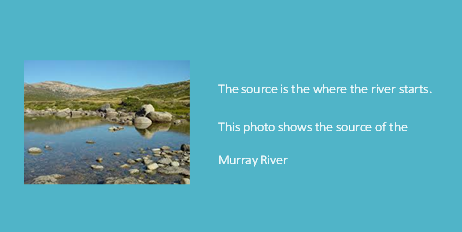
The Source
The Mouth
A Tributary
A Floodplain
The upper course
The middle course
The lower course
Activity 3: Rivers Folio
We are going to create a River Folio.
You will need to research a river and use maps, images and fun facts to tell the story of your river.
You can choose a River anywhere in the world, make sure you include information relating to each of the ten points below.
For example:
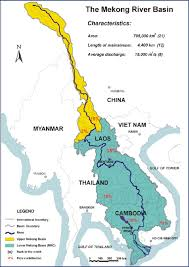
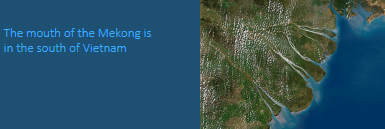
The Mekong River has its Source in Tibet and its Mouth in Vietnam.
The river travels through 7 countries on its way to the ocean.
Over 60 million people are dependent on the Mekong River for their livelihood.
Don't forget to include pictures of your river and try to label its features!
Your folio must include the following elements.
What is the name of the river you are investigating.
Location – where is your river located? (Include a map)
Where is the source of the river?
Where is the mouth of the river?
How long is the river?
How large is the catchment of the river?
How have humans altered the river? E.g. Dams or Weirs
How do humans use the river?
Which countries depend on the river you are investigating for water?
What are the threats to the river.
Activity 4. Humans and Water
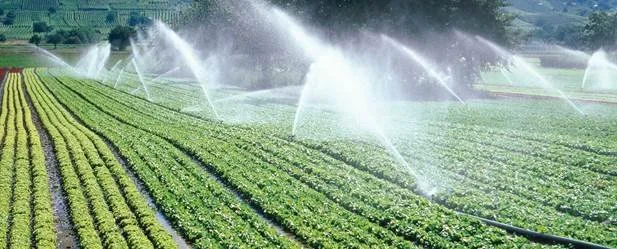
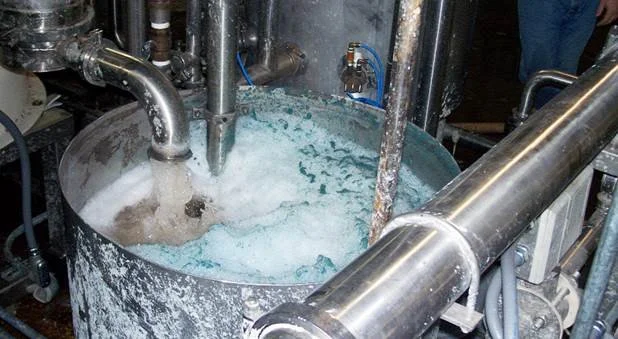
Humans use water for drinking, cooking, and sanitation, ensuring health and survival. Agriculture relies on irrigation to grow crops, while industry uses water for cooling, processing, and cleaning. Hydropower generates renewable energy. Recreation and cultural practices also depend on water.
Sustainable water use means managing this vital resource wisely so it remains available for future generations. It means reducing wasteful us, preventing pollution, reusing and recycling water, and protecting ecosystems. By balancing our use of water we ensure clean and reliable water supplies for human uses and the environment.
To do: Water footprint questions
The amount of water we use is called our water footprint.
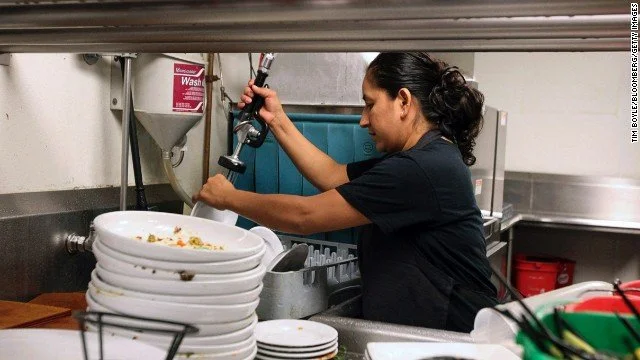
Every day we use water for all sorts of things.
List 10 things that you use water for.
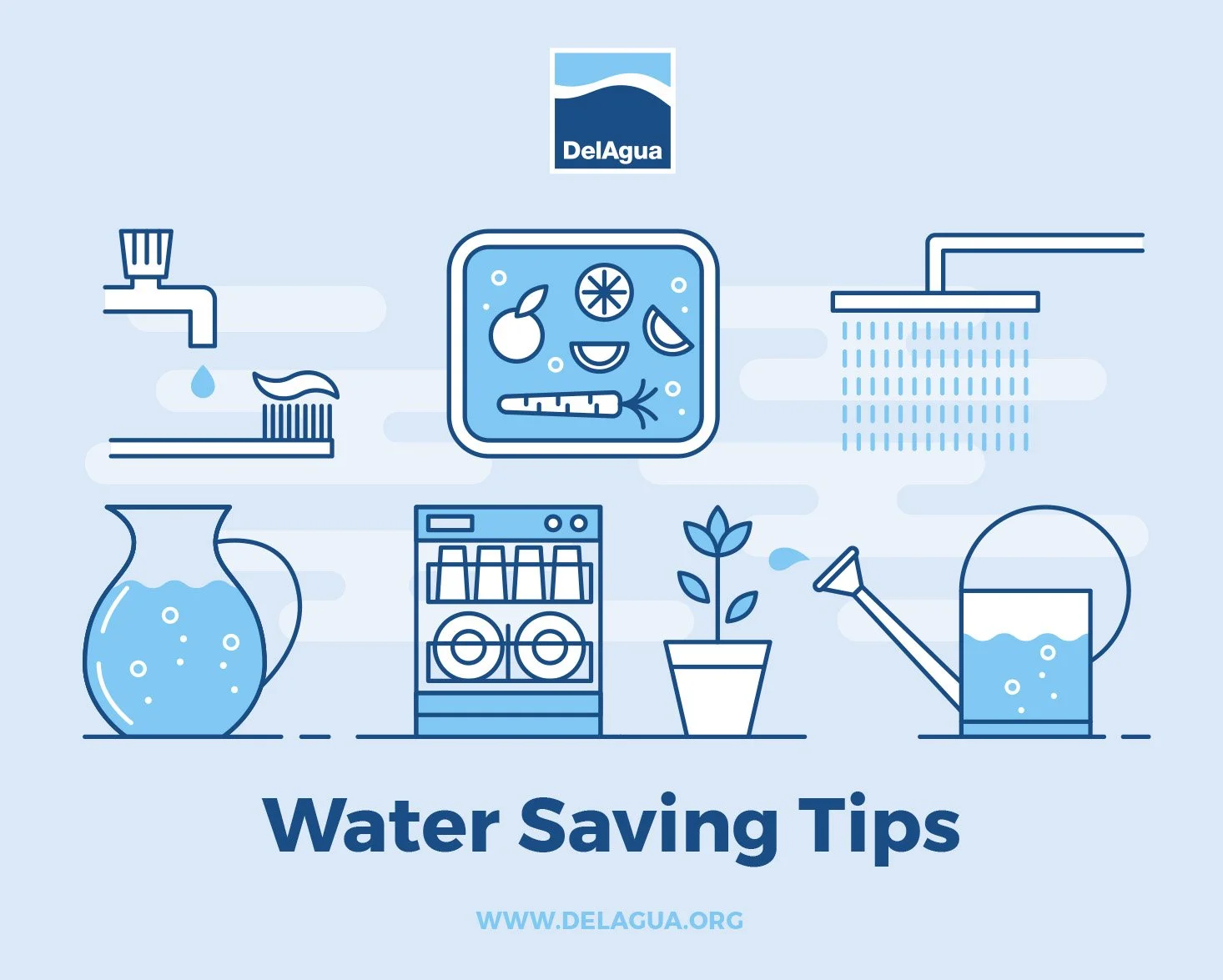
Explain 5 ways that you can save water around the home
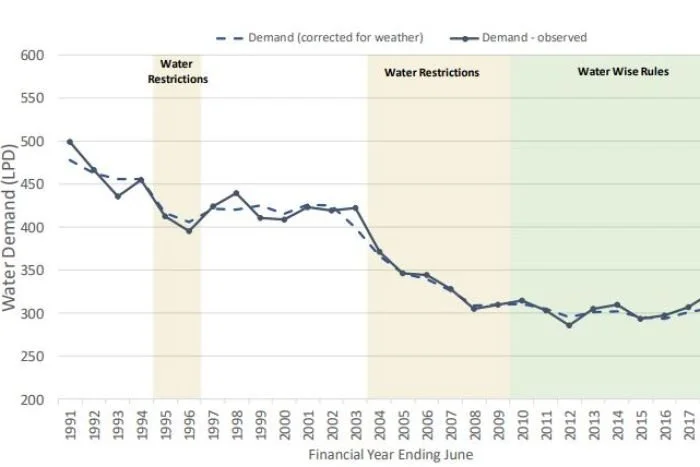
Whilst South Australians have one of the highest per person water consumption rates in the world, the amount we use is changing.
The graph shows recent patterns in daily average residential water consumption for Adelaide.
How has water use changed on Adelaide since 1991?
Why do you think that South Australian households are using less water?
Can you identify and label the water use activities below?
Total water use
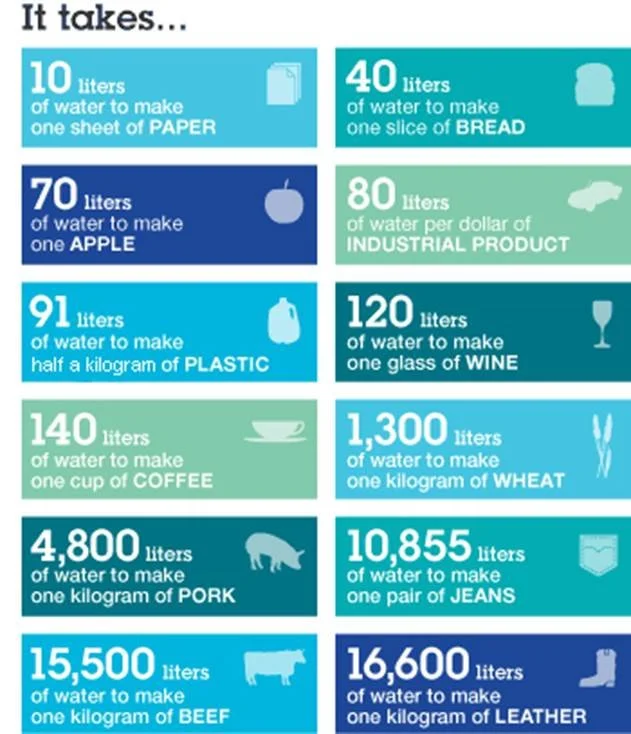
6. What is the most surprising use of water minimum and maximum?
7. What are five ways you could reduce your water footprint using examples from the infographic?
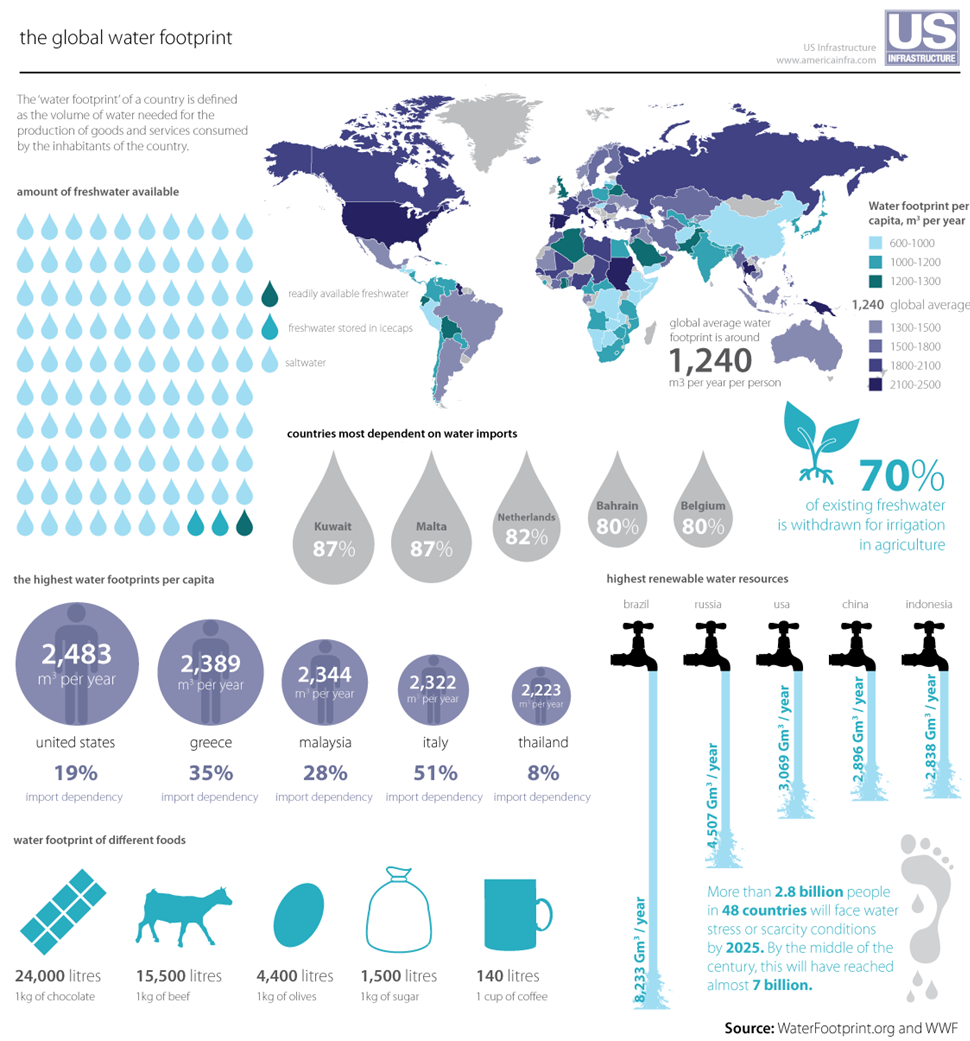
Water footprints around the world
People living in MEDC’s countries like Australia use far more water per day than people living in LEDC’s like Vietnam.
Suggest reasons why people in LEDC’s like Australia use more water than people in LEDC’s.
List 5 countries that have the highest water footprints per person.
List 5 countries that have the lowest water footprints per person. Why do you think this is?
Which foods have the highest footprints? Does this mean we should eat less of them?
Which food is the biggest user of fresh water?
Activity 5. Water Allocation submission to Parliament
Scenario: Adelaide is having a devastating drought that has led to water shortages.
The state government has proposed legislation that will allocate the limited available water to various stakeholders.
Your group has been invited to present your concerns and propose amendments to the proposed legislation before a committee that will make recommendations to government about how limited water resources are allocated.
Possible groups:
Householders action group
The feed Adelaide farmers group
Industry provides jobs coalition
Aboriginal community representatives
Protect the Environment organisations
Regional towns committee
Recreational lake and river users association
What happens to a proposed bill after community consultation?
The government will take these proposed amendments and introduce a Water Allocation Bill to pParliament. The House of Representatives.
The House will then debate and vote on the bill.
If it passes it will be sent to the Upper House. The Senate. To review the decision and suggest changes.