Revision
The idiots guide to being an exam boss.
First rule of exam study. Do as many practice questions as possible
Second rule of exam study. The most effective way to answer exam questions correctly is through practice.
For Geography skills, just reading through notes just doesn’t work. Use the revision questions to practice your understanding and answer structure
1. Read the question
This seems obvious. And yet.
First, pick out the key words and terminology. These words specify what you are to write about. Ensure that when start your answer you are doing exactly what is asked of you by the key words.
2. Use the correct terminology
Exams are not a place to write a blog or social media post. Use the correct Geography terminology and processes in your answers.
3. Use evidence!
It cannot be stressed enough how important examples are in Geography when you answer questions. Every ecosystems case study, every population dynamic topic and all economic activity trends, NEED EXAMPLES.
Use statistics, news articles, events, etc, they are essential to get the top marks.
BUT. Make sure your evidence and examples are relevant and answer the question. (See read the question above) As good as evidence is, there’s no point using it if it doesn’t enhance your response. Another tip is to be constantly gathering up to date statistics and illustrative examples that link to the syllabus
Good luck all players.
1. Development and disparities
Development.
Define development indicators.
Explain the difference between single and composite indicators using two examples.
Identify two possible problems with development indicators.
Refer to the graph. Describe the distribution of global development using the HDI.
List 6 indicators that could be included in a composite development index.
Explain the purpose of the Gini index.
Briefly describe four barriers to development.
Explain, using an example, how lack of property rights limits economic growth
Disparities.
List the causes of disparities in South Australia
The negative consequences for communities experiencing disparities.
Explain a fieldwork technique for identifying disparities in the community
2. Food security
Food insecurity
Define food security in your own words using examples.
What are the four main causes of food insecurity?
Refer to the graph. Which world regions have the highest rates of food insecurity?
Suggest reasons for the high rates of hunger in these regions.
Environmental causes
List the environmental causes of food insecurity.
How could water stress increase food prices or food insecurity?
How could soil degradation increase food prices and food insecurity
Human impacts
Use two country examples to explain how hunger (food insecurity) impacts development in these countries. (Hint. Life expectancy and other health indicators.)
Describe a possible solution to food insecurity that you have studied.
3. Rivers and human activities (Dams)
The problem with Dams
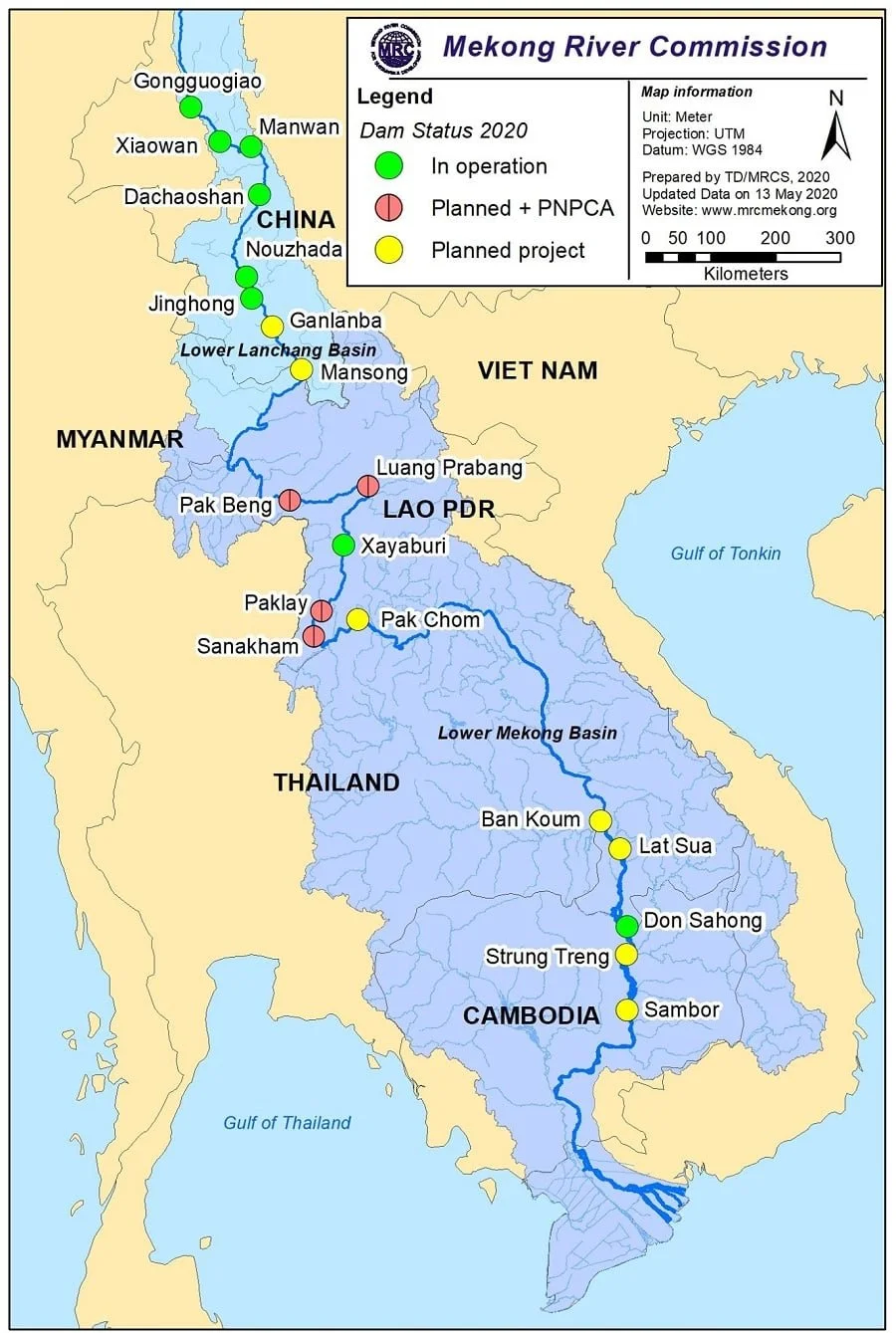
Refer to the image. Which downstream country will be most affected by changes to sediment and water flow?
Describe, using examples, four downstream impacts on human systems as a result of the construction of dams on the Mekong River.
Describe, using examples, four downstream impacts on environmental systems resulting from the construction of dams on the Mekong River.