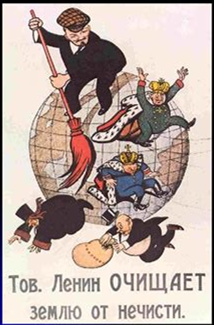
Imperialism. Everybody is doing it
'In recent times, European nations, with the use of gunpowder and other technical improvements in warfare, controlled practically the whole world. One, the British Empire, brought under one government a quarter of the earth and its inhabitants.'
-John Boyd Orr
The British Empire was one of the largest empires in world history. At its peak in the 19th C, it controlled a quarter of the world's population and a third of its land surface. British colonialism began in the late 15th C with the explorations of John Cabot. These early voyages were primarily motivated by a desire for wealth and power.
1. British empire introduction.
“We seem, as it were, to have conquered and peopled half the world in a fit of absence of mind.”
— John Robert Seeley, The Expansion of England (1883)
Mr Seeley was being partly ironic. He argued that Britain did not set out with a clear, coordinated imperial master plan. However, there were clear reasons why the British pursued their empire.
1.. Economic and political reasons
The British crown was specifically interested in commodities and cash crops like tobacco, sugar, and spices. These commodities fuelled the industrial revolution and were sold in European markets. The British also established control over strategic trade routes, like the Spice Route using the East India Trade Company in competition with France and Spain, expanding British influence.
2. Ideological and strategic reasons
As the British Empire expanded, other motivations emerged, including (1) a desire to gain a strategic advantage over rival European powers and (2) to spread Christianity. The imperial experience had a profound effect on both colonised and colonising nations. In the colonies, indigenous peoples were often displaced, exploited, and discriminated against. In Britain, the imperial experience led to a sense of national superiority and a belief in the right to rule over other peoples.
To do: questions
What were the benefits that the British rulers hoped to gain from expanding their empire?
Extra: Who was Adam Smith and why do you think he viewed the supposed benefits of empire with skepticism?
What did the British people think of the empire?
The Absent-Minded Imperialists, B.Porter (2004)
'..public opinion cared little for Empire, there is little evidence of public engagement with empire and its benefits…'
The Empire Project, J. Darwin (2009)
' ….. Victorian celebrations of imperialism, however eyecatching, were ‘lost in the mass of non-imperial production’.
The Intellectual Life of the British Working Classes. J. Rose (2001)
'… that working-class memoirs tend to display apathy, even antipathy, towards matters imperial….'
The British empire - built on sea power and trade
During the 18th century, Britain rose to a dominant position among European trading empires, and became the first nation to industrialise. Merchants sent out ships to trade with North America and the West Indies, where England had established a network of colonies. In 1686 alone these colonies shipped goods in the form of raw materials including sugar and tobacco worth over £1 million to London. In return, exports to the colonies consisted mainly of woollen textiles and guns;
Trade and settlement also occurred in Asia. The ships of the British East India Company, a large joint stock company based in London traded in bullion, textiles spices and tea with Bengal, the Middle East, China and Indonesia. By 1775 Britain possessed far more land and people in the Americas than either the Dutch or the French, who were the two main northern European rivals for international power and prestige.
To do: questions
Use examples from the excerpt to illustrate the benefits that England wanted from its colonial empire. Include an explanation of the benefits of controlling trading routes?
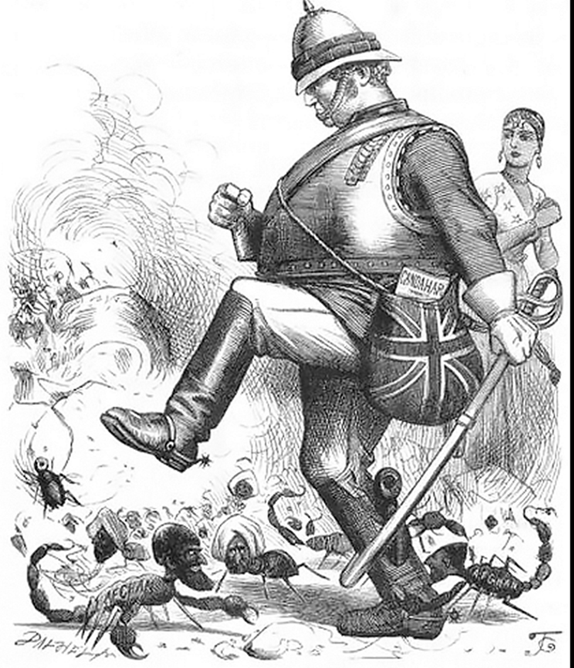
Describe the message of the cartoon.
2. Belair Bugle - We need a bigger Empire
Letter to the editor
All Imperial projects need good public relations.
You have been tasked with writing an article for the Belair Bugle (circa 1860) about the importance of expanding British Imperial possessions.
To do: Write a newspaper article about why the British need an Empire.
The editor has asked that you include the following points in your article.
Explain the benefits of empire for the British.
What are the benefits for the colonised peoples?
Include examples of colonised people who have 'benefited' from colonisation.
Include quotes from commentators / historians who see the value of Empire.
Include a newspaper cartoon that we can steal for the Bugle.
How will history judge us if we fail to seize the moment of empire?
3. The dark side of imperialism.
The dark side of imperialism. Slavery
‘Great Britain derives nothing but loss from her dominions’ Adam Smith 1776
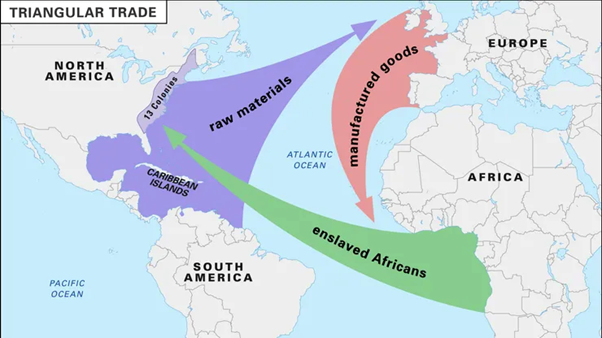
During the early stage of the British imperial project , slavery was an important part of the economy. Early colonisers of the Americas had hoped to use the local peoples of their colonies as a form of cheap labour on farms and in mines. However, diseases like malaria and smallpox and the constant warfare made this impractical.
As a result, the British turned to Africa as a source of slaves. Slaves were brought from Africa to work on plantations in the Americas and the Caribbean. They were also used in other parts of the world, including India and Southeast Asia.
Between the 16th and 19th centuries, an estimated 12 million Africans were taken from their homes and sold into slavery (Other empires traded slaves, including the Dutch. Portuguese, Spanish and French. The Ottoman slave markets were a significant part of the Ottoman economy).
The slave trade was extremely profitable for British ship owners and merchants. It is estimated that between 1750 and 1830, the British slave trade generated a profit of £100 million. Eventually, the slave trade was abolished in 1807, but slavery itself continued to exist in British colonies until it was finally made illegal in 1833.
To do: questions
Why did the British start using slaves in the American colonies?
Refer to the map to explain how Atlantic slave trade was organised?
How was slavery integrated into the British imperial project?
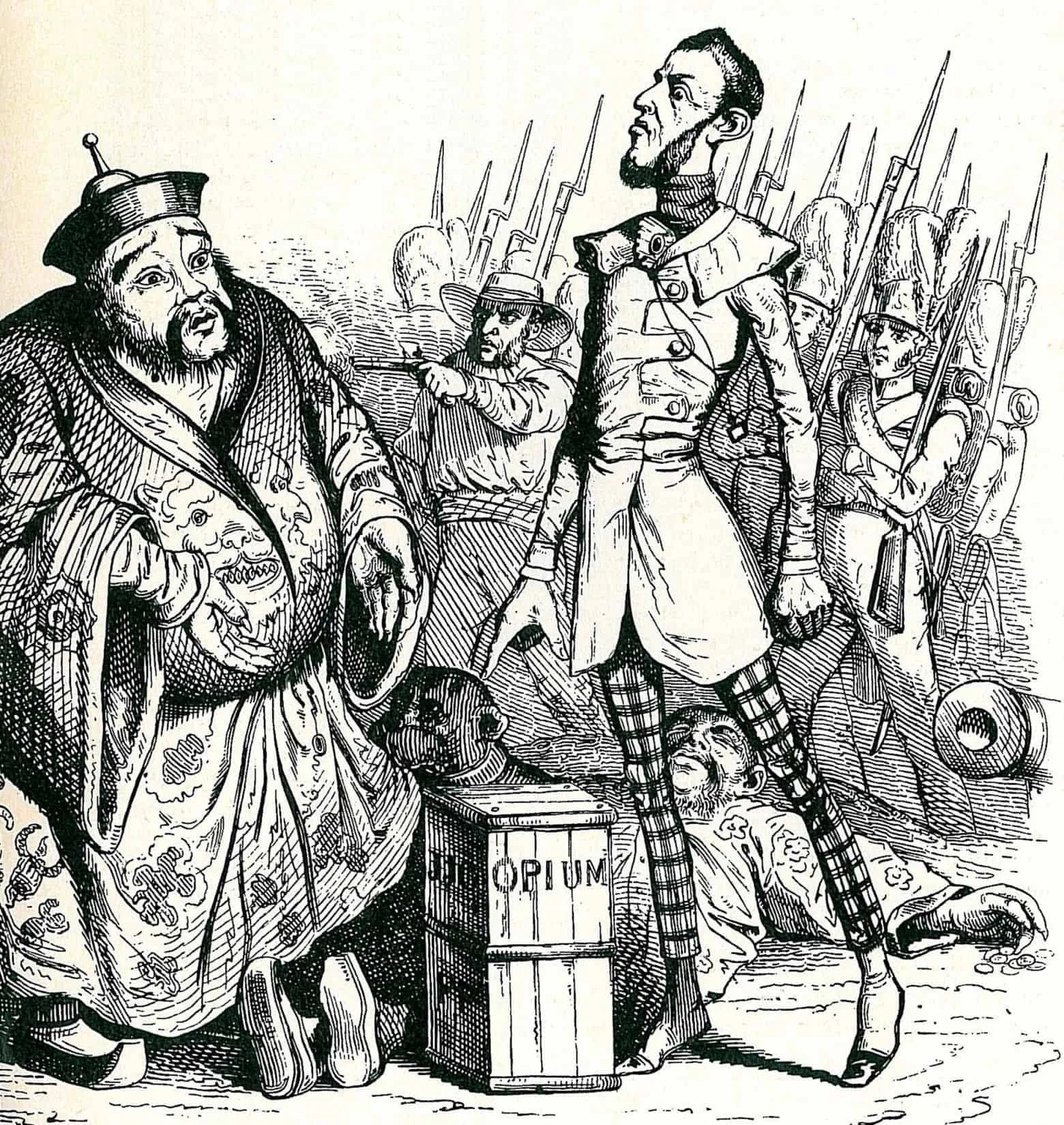
The dark side of imperialism. The Opium Wars
The roots of the Opium War lay in a trade dispute between the British and the Chinese Qing Dynasty. By the start of the 19th century, the trade in Chinese goods such as tea, silks and porcelain was extremely lucrative for British merchants. The problem was that the Chinese would not buy British products in return. They would only sell their goods in exchange for silver, and as a result large amounts of silver were leaving Britain.
In response, the East India Company and other British merchants began to smuggle Indian opium into China illegally, for which they demanded payment in silver. This was then used to buy tea, silks and other goods. By 1839, opium sales to China paid for the entire tea trade. The Chinese attempted to stop the trade in opium by destroying shipments and closing ports to English traders.
In response the English attacked the Chinese ports with their navy to force access. The war ended on 17 August 1842, with the Treaty of Nanking enabling the British to 'carry on their mercantile transactions with whatever persons they please'. The treaty committed the Chinese to free trade, including the trade in opium. Hong Kong was ceded (given) to Britain, and the Treaty Ports of Guangzhou, Amoy, Foochow, Shanghai and Ningpo were opened to all traders. The Chinese also paid reparations for British military and trade losses (this included having to pay for opium that had been destroyed before the war!)
To do: Opium Wars questions
What were the Opium Wars about?
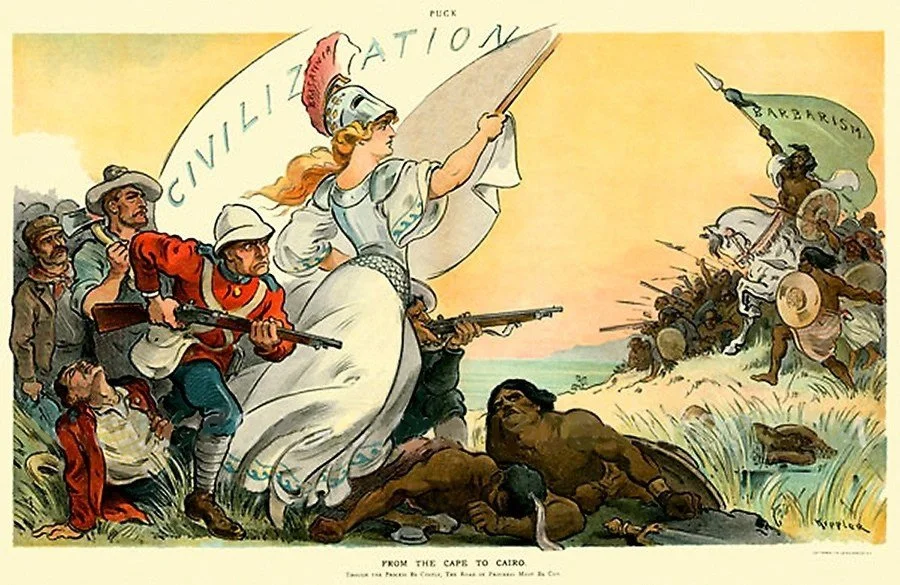
What is the message of this newspaper cartoon?
Use examples from the slave trade and the opium wars to assess the extent that British colonial actions align with their stated aims?
Extra: Was the ‘dark side’ a feature or a bug?
4. Origins of the British Raj
Humble beginnings
The British East India Company was established in 1600 to carry out trade with the East, including India. Initially, its main goal was to engage in profitable trade in spices, cotton, silk, and later tea, not territorial expansion. The company set up trading posts and forts along the Indian coast, mainly in regions controlled by weak or declining states. Using a combination of diplomacy, alliances with stronger Indian rulers, and military force. The company began to expand their influence and assert control over important ports and territories.
During the 18th C, Britain and France became the major European presences in India. Both countries sought trade and used companies to secure their national interests. The English gradually expanded from their trading posts on the west coast to the richer region of Bengal. The British East India Company used Indian troops, built strategic forts to protect its interests and gradually began to expand into the interior. Trade with India was extremely profitable.
The Battle of Plassey
The Battle of Plassey (1757) was fought in Bengal between the East India Company, led by Robert Clive, and the Nawab of Bengal. After key defections from the Bengali coalition, the Company won decisively. This victory gave the British political control over Bengal and marked the beginning of British territorial rule in India.
To do: questions
Describe the process that the British East India Company used to expand their influence over important Indian ports and territories.
Background briefing: The Mughal rulers of India
The East India Company arrived in India the early 17th century, at that time the Mughal Empire was grappling with internal strife, weak successors, and external invasions. By the mid 18th century, when the East India Company gained prominence, the Mughal Empire was in a state of terminal decline. The empire had fragmented, and various regional successor states, emerged. The Mughal emperor had become a symbolic figurehead with limited political influence.
The East India Company took advantage of the weakening central authority to establish its influence in various parts of India. The Battle of Plassey in 1757 and the Battle of Buxar in 1764 were pivotal events that solidified the Company's control over Bengal, Bihar, and parts of northern India.
“One of the reasons for this cataclysmic change of destinies was the inherent weakness of a decaying agricultural empire of the Mughals which after more than two hundred years of rule over vast areas of India, was at its terminal stage and needed a small push to crumble like a house of cards.
That push was given by six East India Companies of different European countries which had extracted rights to trade with India from the Mughals but transformed themselves as the arbiters and protectors of several Indian states. In this process they not only became rich but also militarily strong because in the twilight years of the Mughal empire they had to arm themselves to protect their economic interests. Their technological superiority as rising industrial powers, turned out to be the decisive factor in capturing vast territories in India.”
― Shahid Hussain Raja, 1857 Indian War of Independence
Source 6. The Atlantic Magazine. CC Hazewell
'The English have frequently been denounced, not only for their errors in governing India, but for their conquest of that country. The French have been especially fervent in these denunciations. It is a fact, however, that the French saw nothing wrong in subduing India until all their own plans to that end had utterly failed. The device originated with them, but the English applied it. Dupleix planned for France what Clive executed for England.
To do: questions
What does Hazewell mean when he states that ‘Dupleix planned for France what Clive executed for England.’?
5. The Jewel in the Crown
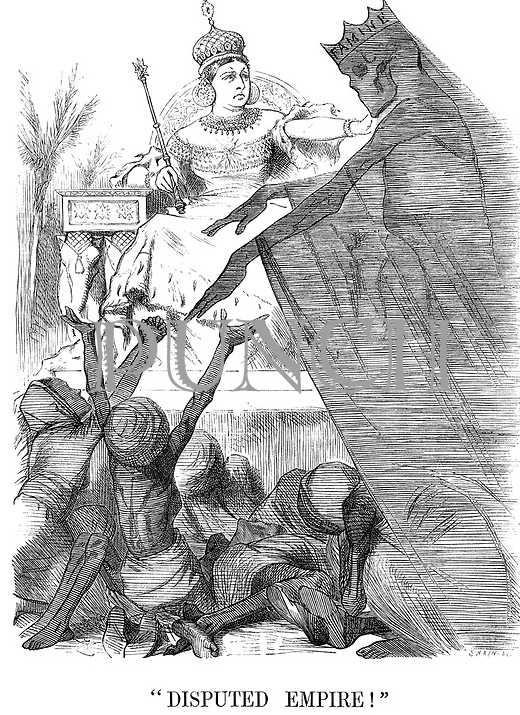
From private company to British Crown (government)
By the early 19th C (1800's), the East India Company's influence in India had grown so extensive that it was effectively governing large parts of the country. However, due to mismanagement and corruption, the Company faced financial difficulties, leading the British government to end the monopoly of Indian trade, except in the area of tea. The Indian Rebellion of 1857, further destabilised rule by the Company. After suppressing the rebellion, the British Crown took direct control of India by passing the Government of India Act in 1858, effectively ending the rule of the British East India Company. After this the British government implemented various administrative and economic reforms to govern the country more efficiently. The British colonisation of India lasted until India gained independence on August 15, 1947.
To do: questions
Describe the two main reasons for the British government decision to take direct control of India from the British East India company.
What were the first actions of the new colonial administration?
Background briefing: Pros and Cons of the British Raj
‘There has never been anything so great in the world's history as the British empire, so great an instrument for the good of humanity.' (Lord Curzon, British Viceroy of India, 1898-1905)
The British Raj reshaped both India and England in lasting and complex ways. For Britain, the Raj brought wealth, raw materials, global power, and prestige, but also heavy costs and political tensions. For India, British rule introduced railways, administration, and new ideas, alongside exploitation, economic disruption, and loss of independence. In this activity, you will examine both the positive and negative impacts of the Raj on each society, recognising that imperialism brought benefits and harms to both sides.
To do: Examine the pros and cons of the British Raj for the English and the Indians.
Use the Colonisation Benefits slideshow to list the pros of colonisation for Britain and India.
Research the cons of British rule for Britain and India. Use examples to illustrate your points.
Discuss: Prepare for a conference were the different views of the impact of the British Raj can be discussed.
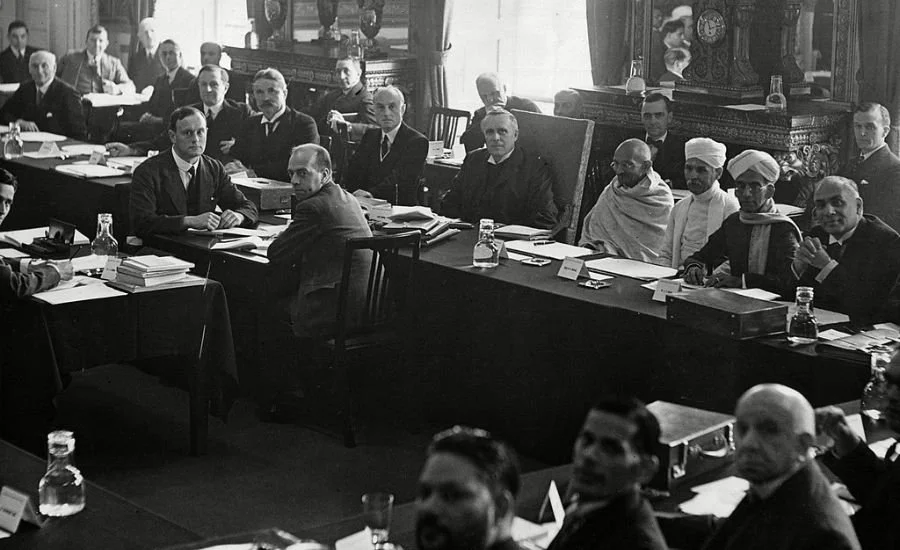
Independence conference: What to do after Amritsar?
Key questions.
How does your position shape what you see as the “benefits” of the Raj?
What do you fear most about immediate independence?
What do you fear most about continued British rule?
Are British officials motivated primarily by profit, duty, racism, strategic security, or some combination?
What reforms would satisfy you in 1920?
Has the British Raj been positive or negative for India in your view?:
Conference participants.
British civil servants
Indian National Congress members
Muslim League representatives
Princes of Princely States
Indian soldiers
British business owners
6. British Raj annotated bibliography
History comes from sources.
Everything we know about history we learn from the sources.
To do: Create an annotated bibliography as part of the research for your upcoming Imperialism essay:
Find sources that address the following three questions.
What were the motives behind the British imperialistic expansion generally and with specific
reference to India?
What were the impacts of the colonisation of India on the Indians (good and bad)?
What were the impacts of the colonisation of India on the British (good and bad)?
Your annotated bibliography should contain the following sources
2 x primary sources
2 x secondary sources (articles, books etc)
2 x newspaper cartoons (primary source
Example Entry:
Bibliographic Citation: Sen. A. (2021). "Illusions of empire." The Guardian
Annotation:
In "Illusions of empire." Sen describes the advantages and disadvantages of the British colonisation of India for the people of India. He highlights the cost of empire for the Indian people and questions assumption that the 'British raj' created a unified India while bringing legal system and infrastructure benefits to the colony. He notes that 'what was truly best in their own civilisation, the upholding of dignity of human relationships, had no place in the British administration of India'
Annotated bibliography in four steps.
Source Citation
Source summary
Concisely summarise main points/evidence from the source
Dot points are fine
Use quotes and facts to support your summary.
For a primary source, explain the type of source, who created the source, and the author's intended audience.
Source Evaluation - Explain how the source contributes to your research
Source assessment - Assess the source's strengths and weaknesses.
Did you find the source persuasive or reliable?
Were there some aspects of the source you felt needed more evidence or were unexplained?
An annotated bibliography allows you to demonstrate source evaluation, reliability, and relevance. It helps us as historians, to assess bias, significance, and usefulness of each source.
A well constructed bibliography shows the depth of your research beyond simple referencing, strengthening the quality and credibility of your historical argument.
We also now have access to Informit (academic databases). To log in, follow the link.
Click on Login/Register, and when you see the screen click on Microsoft. To log in with your school email.
Key word search:
British Empire India
The British Raj
Impact of British colonialism in India

7. Belair Bugle - Should we still be in the Empire business?
Letter to the editor
All good Imperial projects must eventually end.
You have been tasked with writing an article for the Belair Bugle (circa 1945) considering the pros and cons of staying in the empire business.
To do: Write a newspaper article that considers the prosa nd cons of the British Empire.
The editor has asked that you include the following points in your article.
Explain the benefits of empire for the British and the colonised peoples.
Consider the arguments against empires in a post world war 2 world.
Include quotes from commentators / historians who see that the European empires are ending.
Include a newspaper cartoon that we can steal for the Bugle.
How will history judge us if we fail to change with the times?