
Task 4. Historical Study.
Task 4. Historical Study
In this task you will create an historical investigation folio as if you are an historian investigating an event.
Your historical study must be based on an aspect of the world since 1750. You are required to inquire, explore, interpret, and research an historical idea, event, person, or group in depth.
The task will require you to present a ‘reasoned historical argument’. A question that invites an investigation into more than one point of view.
Completing your historical study folio.
Use the following guide to help you structure and write this response:
Part 1. The Inquiry Question (50–100 words)
State your question clearly
To what extent does the evidence support the claim that ……..?
Briefly explain why it is historically significant.
Part 2. Historical Context (Overview)
Provide background to help understand your topic.
Include the following information in your overview:
A timeline (6–8 key events)
A short explanation of cause and effect
Key people, ideas, or developments
Part 3. Evidence Portfolio. (Source analysis)
You must include at least 4 – 6 sources, including:
A minimum of 2 primary sources
A minimum of 1 secondary source
A newspaper cartoon
For each source, include the following information:
Origin (who created it, when, where)
Perspective (viewpoint, bias, purpose)
Reliability and limitations
Key evidence (quotes or details)
Explanation of relevance to the inquiry question. (How does this source help answer your question)
Part 4. Contrasting perspectives. The Counter argument
History is contested.
Include the following information in your contrasting perspectives:
Identify at least one interpretation that challenges your argument
Use evidence from the sources to explain this alternative view
Part 5. Historical conclusion (In class 300 – 400 words)
Include the following information in your conclusion.
Answer your question: To what extent…?
Make a clear judgment
Use evidence from your sources
Acknowledge counterarguments.
“Which source most changed your interpretation and why?”
How to do the Historical Study
Part 1. The Inquiry Question (50–100 words)
Robert C. Williams suggests that a research question might:
"ask how or why an event happened (causation, explanation)"
"ask what the consequences were of a particular event"
"discuss the intellectual origins of a particular idea"
"ask what the cultural context of an event was";
"ask whether or not an individual was responsible for a certain act"
"ask about the social history of a political event"
"quantify broad trends in a society at a particular time"
For example:
To what extent did the Cold War shape the outcomes of decolonisation movements after 1945?
To what extent did decolonisation mark the end of imperial control, rather than its transformation into new forms of influence?
To what extent did imperialism benefit colonised societies?
To what extent was imperialism responsible for long term instability in former colonies?
To what extent was economic gain the primary driver of imperial expansion in the 19th century?
We also now have access to Informit (academic databases). To log in, follow the link.
Click on Login/Register, and when you see the screen click on Microsoft. To log in with your school email.
Key word search:
British Empire India
The British Raj
Impact of British colonialism in India

Part 3. Annotating your sources
Your annotated bibliography should contain the following sources related to decolonisation.
2 x primary sources (text)
2 x secondary sources (articles, books etc)
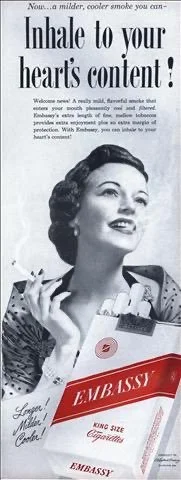
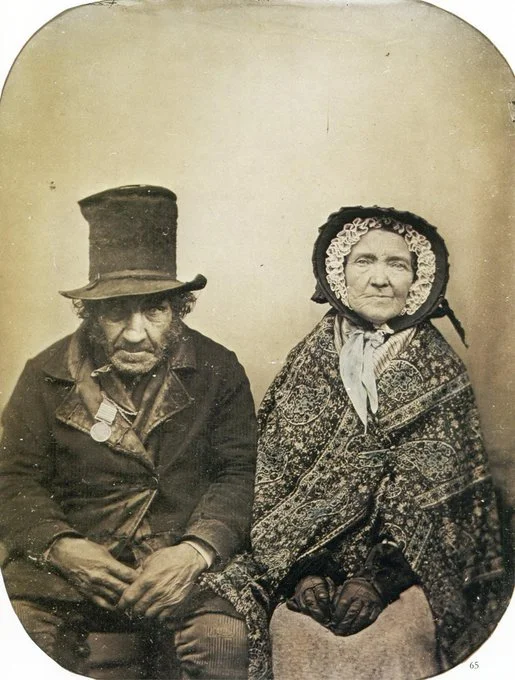
1 x primary source images (photos, newspaper cartoons, posters)
Annotated sources in four steps
Source Citation
Source analysis
Origin (who created it, when, where)
Perspective (viewpoint, bias, purpose)
Concisely summarise main points/evidence from the source (Dot points are fine)
Use quotes and facts from the source to support your summary.
Assess the source's strengths and weaknesses
Source Evaluation
Explanation of relevance to the inquiry question. (How does this source help answer your question).
An annotated bibliography allows you to demonstrate source evaluation, reliability, and relevance. It helps us as historians, to assess bias, significance, and usefulness of each source.
A well constructed bibliography shows the depth of your research beyond simple referencing, strengthening the quality and credibility of your historical argument.
Sources Analysis Guide
Don’t forget: Quote often and begin your response with name of the author, not the Source number. Put the source number in brackets at the end of the quote/paraphrasing.
For example:
This is supported by Jones who states that 'History students would be more popular at parties if they used this method.' (Source 3)
More successful responses:
contain relevant evidence (quotes and observations) from sources when required.
Less successful responses
provide responses without reference to any evidence from the source
state that sources are limited without explaining why using evidence
do not assess the nature of sources clearly
do not explain how the nature and origin of the sources are a strength or limitation
do not include the source in the response.
Paragraph planning
Paragraphs are beautiful - a four step fail safe plan
To do: Writing a TEEL paragraph
Topic: Begin EACH new paragraph with a clear and precise topic sentence that refers directly to the content of the paragraph. The topic sentence tells the reader what the paragraph is about, or its main idea
Explain: Explain what you mean in greater detail.
Evidence: Provide evidence to support your idea or claim. To do this, refer to your research. This may include: case studies, statistics, documentary evidence, academic books or journal articles. Remember that all evidence will require appropriate citation.
Link: Summarise the main idea of the paragraph, and make clear how this paragraph supports your overall argument. The linking sentence links one paragraph to the next and provides another device for helping you ensure your text is cohesive.
Referencing Guidelines
When do you need an endnote/ footnote?
Quotes
Paraphrasing
Facts and figures
Images
How to footnote
The first time you footnote a book, article or document you need to list it in full as follows:
Jones, E., A collection of inappropriate remarks made in the History classroom, Penguin, 2024, p.34
If you quote from Inappropriate Remarks as your next quote you don’t write out the whole author/title again you simply use the abbreviation ibid., p#
If you quote from the same source, same page it is simply ibid.
If your next quote is from a different source, you need to write out full reference: author surname, initials, title in italics, publisher, year of publication, page number.
If your next quote is again from Inappropriate Remarks, you simply put the author’s name and initials and the abbreviation op.cit., p#
Footnote samples
Jones, E., A collection of inappropriate remarks made in the History classroom, Penguin, 2024, p.34
ibid.
ibid., p.38
McKenzie, C.M., Please don't make me go back in there. A classroom memoir, Featherhead, 2019, p.11
Jones, E., op.cit., p.59
Example reference list
Bibliography:
Aub.edu.lb.libguides.com. (2020). LibGuides: Lebanese Civil War: 1975-1991: Home. [online] Available at: https://aub.edu.lb.libguides.com/LebaneseCivilWar.
Badran, T., 2008. The Lebanese Civil War. MERIA: Middle East Review of International Affairs, 12(2), pp.MERIA: Middle East Review of International Affairs, June 2008, Vol.12(2).
Crawford, M. & Army Command General Staff Coll Fort Leavenworth KS School Of Advanced Military Studies, 2010. Civil War and Intervention: Lessons Remembered From the Lebanese Civil War and the U.S. Response.